Quick Answer Box: THCa percentage measures how much tetrahydrocannabinolic acid is present in unheated flower. It signals potency potential, but not actual THC strength that depends on the conversion rate during decarboxylation. A 20% THCa flower delivers roughly 17.5% active THC after heating, due to a 0.877 conversion factor applied by testing labs.
TL;DR
- THCa percentage shows raw cannabinoid content before heat is applied it is not the same as THC potency.
- The conversion rate formula is: Total THC = (THCa × 0.877) + Delta-9 THC already present.
- A 20% THCa flower produces about 175–177 mg of potential THC per gram, not 200 mg.
- Always check the certificate of analysis (COA) from a third-party testing lab before buying.
What Is THCa Percentage?
THCa percentage is the amount of tetrahydrocannabinolic acid found in cannabis flower or concentrate before any heat is applied. THCa is the natural, non-intoxicating precursor to Delta-9 THC. Until you smoke, vape, or otherwise heat the product, that number reflects raw cannabinoid content not the active THC your body actually processes. It is the primary potency level listed on any compliant lab report.
How Does THCa Convert to THC, and Why Does It Matter?
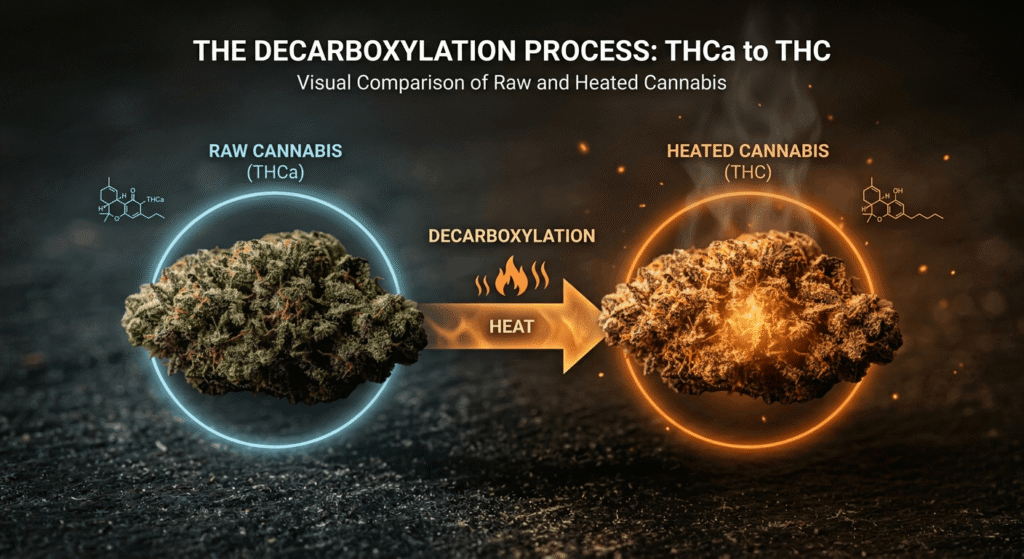
THCa converts to Delta-9 THC through a process called decarboxylation. Apply heat from a lighter, vaporizer, or oven and the acid molecule sheds a carboxyl group, transforming into the psychoactive compound most people associate with a cannabis high. No heat means no conversion, which is why eating raw flower produces no intoxicating effect.
The conversion is not 1:1. The molecular weight shift means only about 87.7% of THCa becomes active THC. Testing labs and regulators use a standard formula to account for this:
Total THC = (THCa × 0.877) + Delta-9 THC already present
A flower testing at 25% THCa and 0.2% Delta-9, for example, yields an estimated Total THC of about 22.1%. That number is a ceiling, not a guarantee actual THC delivered depends on combustion efficiency, device type, and inhalation technique. Still, it is far more useful than the raw THCa number alone when comparing products.
How Strong Is 20% THCa Flower Compared to Higher Potency Levels?
This is the question most buyers actually want answered. Here is how the potency tiers break down in practice.
A 20% THCa flower delivers approximately 17.5% Total THC after conversion. Per gram, that is roughly 175–177 milligrams of potential THC. That puts it squarely in the mid-to-strong range. Most commercial dispensary cannabis runs between 18–25% THC, so a 20% THCa hemp flower sits right alongside mid-shelf dispensary products in terms of potency level.
At 25% THCa, you are looking at around 22% Total THC and roughly 220 milligrams of potential THC per gram. At 30%, the ceiling climbs to about 26.5% Total THC and 265 milligrams per gram. The jumps feel meaningful on paper, but experienced users often report that the difference between a 22% and a 28% strain matters far less than strain genetics, terpene content, and growing method.
| THCa % | Approx. Total THC After Conversion | Milligrams per Gram | Potency Level |
|---|---|---|---|
| 10–14% | 8.8–12.3% | 88–123 mg | Low |
| 15–19% | 13.2–16.7% | 132–167 mg | Moderate |
| 20–24% | 17.5–21.1% | 175–211 mg | High |
| 25–29% | 21.9–25.4% | 219–254 mg | Very High |
| 30%+ | 26.3%+ | 263+ mg | Elite / Premium |
These figures assume near-complete decarboxylation. Real-world delivery is always somewhat lower, depending on how the product is consumed. Cold vaporization at lower temperatures, for instance, converts THCa less efficiently than direct combustion.
What Is a Certificate of Analysis, and How Do You Read One?
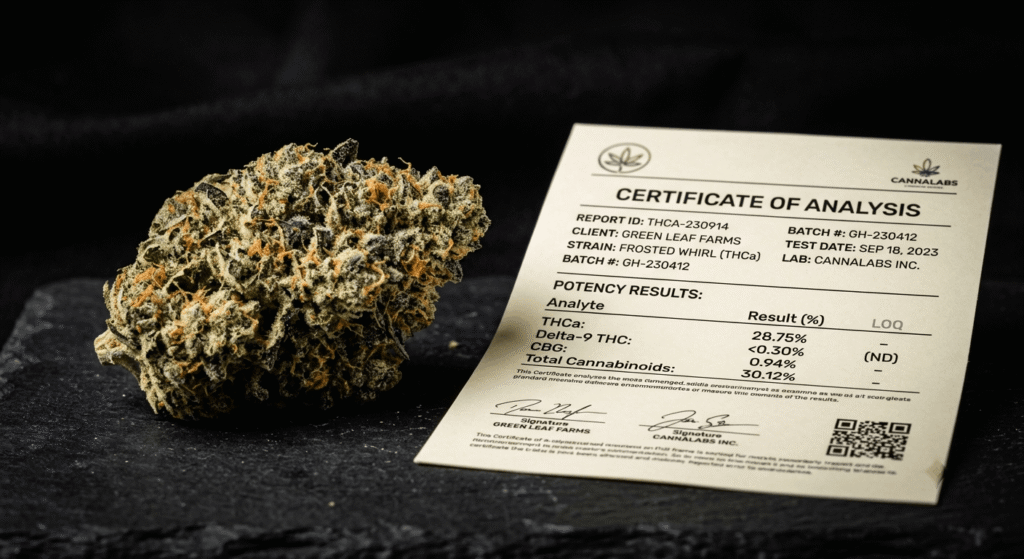
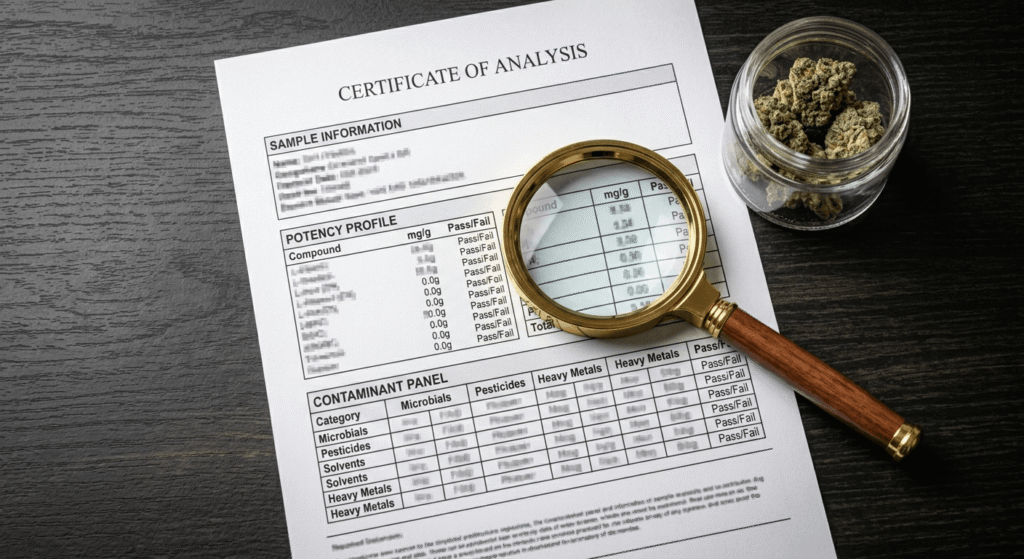
A certificate of analysis, commonly called a COA, is a lab report issued by an independent third-party testing lab. It is the document that actually confirms what is in your flower. Product labels can be wrong. COAs from accredited labs cannot be faked without effort and the best brands make them easy to find on every product page.
Here is what to look for on any COA:
- Lab name and accreditation. The testing lab should be ISO 17025-accredited and have no ownership connection to the brand. Third-party means genuinely independent.
- Test date. A COA for flower should be no older than 6–12 months. Cannabinoids degrade over time, and an old report does not reflect the product you are holding.
- Batch ID match. The batch ID on the COA must match the number on your product packaging. No match means the report may not apply to what you bought.
- Potency panel. This section shows THCa percentage, Delta-9 THC (must be at or below 0.3% for federal hemp compliance), CBD, CBG, CBN, and other cannabinoids. The THCa number here is what the 0.877 conversion formula is applied to.
- Contaminant panels. A full-panel COA includes pesticide screening, heavy metals (lead, arsenic, mercury, cadmium), residual solvents, mycotoxins, and microbial contamination. Each should show either ND (not detected) or a clear PASS.
- Terpene profile. Not every COA includes terpene data, but the ones that do give you the clearest picture of flavor and the entourage effect.
If a brand does not publish COAs or makes them hard to locate, that is a sign to shop elsewhere. At Co Exotics, every product is backed by published lab results you can review them directly on the lab results page.
Does a Higher THCa Percentage Always Mean a Stronger Experience?
Not exactly. THCa percentage is the most reliable single number for estimating potency, but it does not fully predict how a session feels. Several variables change the equation.
Terpenes play a significant role. The entourage effect describes how cannabinoids and terpenes work together, and a 20% THCa strain with a rich, diverse terpene profile can feel more complex and impactful than a stripped 30% strain with minimal terpene content. If you are buying high-THCa flower specifically for experience quality rather than raw potency, look for strains with robust terpene panels on the COA. Our introduction to terpenes covers the major players and what they contribute to the overall effect.
Individual tolerance matters too. Body weight, metabolism, prior cannabis use frequency, and endocannabinoid receptor sensitivity all determine how any given potency level lands. A 20% THCa flower that feels strong to a first-time user may feel moderate to someone who smokes daily.
Consumption method shifts the outcome as well. Smoking and vaping convert THCa at different efficiencies. Temperature matters — low-temp vaporization at around 320°F preserves terpenes and converts THCa more gradually; higher temperatures push conversion faster but can degrade delicate aromatic compounds. Combustion in a bowl or joint is less precise but delivers THC rapidly.
One more factor: grow method. Indoor-grown flower tends to test at higher THCa levels because of controlled lighting and climate conditions. Light dep and outdoor flower can be just as good but often shows a slightly wider variance in cannabinoid levels from batch to batch. Our indoor flower collection includes strain-specific COAs so you can compare potency levels directly.
Common Mistakes to Avoid With THCa Percentages
Misreading a COA or fixating on a single number leads to poor purchasing decisions. Here are the patterns to avoid.
Treating THCa percentage as equivalent to THC percentage is the most common error. A product showing 28% THCa does not deliver 28% THC. After the 0.877 conversion factor, you are looking at roughly 24.6% Total THC. The gap grows larger at lower percentages, where the difference is most relevant to newer users trying to dose carefully.
Ignoring the Delta-9 THC line is another mistake. For federally compliant hemp flower, Delta-9 THC must stay at or below 0.3% by dry weight. A COA that does not clearly show this number or a product where it is missing should not be purchased. Under the 2018 Farm Bill, the 0.3% Delta-9 threshold is what defines hemp as federally legal, as confirmed by the FDA’s hemp production guidance.
Buying without a COA at all is the biggest risk. An uncertified product with no third-party lab verification could contain more Delta-9 THC than listed, pesticide residue, heavy metals, or simply far less THCa than the packaging claims. The COA is not optional for safety-conscious buyers.
Chasing the highest number regardless of strain fit is also common. Budget strains in the 15–18% THCa range often deliver excellent experience quality for the price. Our budget strains collection includes lab-verified options for buyers who want solid potency without paying premium indoor prices.
How to Choose the Right THCa Potency Level for Your Needs
Selecting the right potency level comes down to your experience, goals, and preferred consumption style. Use this as a starting framework.
- New to THCa flower: Start in the 10–16% range. Effects are real but gradual, giving you room to gauge your tolerance before moving up. Smalls strains in this range are cost-effective for testing.
- Occasional or moderate users: The 17–22% range is the sweet spot for most people. It matches mid-shelf dispensary cannabis in potency and covers everything from social sessions to evening wind-down.
- Experienced users with established tolerance: 23–28% THCa, particularly indoor-grown strains, delivers pronounced effects with faster onset. Expect effects within 1–5 minutes of inhalation, peaking around 15–30 minutes.
- High-tolerance or concentrate users: Above 28% flower or any concentrate form (badder, crumble, live resin, rosin) occupies a different tier. Concentrates routinely test between 50–85% THCa — apply the 0.877 formula and the math moves quickly.
- Microdosers or sensitivity-focused buyers: Below 12% THCa with full terpene diversity often produces nuanced, functional effects without intensity. Not every high-potency buyer is chasing the ceiling.
Always confirm your potency tier against the COA, not just the product label. Labels can lag behind batch updates; the certificate of analysis reflects the actual sample that was tested.
Frequently Asked Questions
1. What is the difference between THCa percentage and Total THC on a COA?
THCa percentage shows the raw tetrahydrocannabinolic acid content before heat is applied. Total THC is the calculated estimate of psychoactive THC available after full decarboxylation, using the formula: (THCa × 0.877) + Delta-9 THC. Total THC is the more useful number for comparing actual potency across products.
2. How many milligrams of THC are in a gram of 20% THCa flower?
A gram contains 1,000 milligrams. At 20% THCa, that is 200 mg of THCa before conversion. After applying the 0.877 conversion rate, you get approximately 175–177 mg of potential THC. Real delivery is always somewhat lower depending on combustion efficiency and consumption method.
3. Does a 30% THCa flower feel noticeably stronger than a 20% flower?
Often yes, but not always. The gap after conversion is about 9 percentage points of Total THC. For new users, that difference is significant. For experienced consumers, terpene profile, genetics, and individual tolerance often matter more than the raw number gap between a 20% and 30% strain.
4. What should I look for on a THCa COA to confirm the product is legit?
Look for these five things:
- ISO 17025-accredited, independent lab name
- Test date within the last 12 months
- Batch ID matching the product packaging
- Delta-9 THC at or below 0.3% (federal hemp compliance)
- Contaminant panels showing PASS or ND for pesticides, heavy metals, and microbials
5. Why does my flower test at a lower THCa percentage than the listing claimed?
Batch variance is normal. THCa levels shift based on harvest timing, storage conditions, and how long the product has been on the shelf. Cannabinoids degrade slightly over time, particularly with heat or light exposure. Always check the COA date if it is more than a year old, the listed potency may not reflect current levels.
Conclusion
THCa percentage is the single most useful number on a product label, but it tells only part of the story. The real potency picture comes from applying the 0.877 conversion rate to get Total THC, reading the full certificate of analysis from an accredited third-party testing lab, and understanding how terpenes, grow method, and your own tolerance shape the experience. A 20% THCa flower from a reputable source with a clean COA and a rich terpene profile will outperform an uncertified 30% product in both safety and consistency. Use the numbers as a guide, verify everything through the COA, and dial in your ideal potency level from there. Browse the full Co Exotics shop at coexotics.co/shop to find lab-tested THCa flower with published COAs at every potency tier.