Quick Answer Box: Badder is a soft, whipped concentrate with a creamy, batter-like texture that’s easy to scoop and rich in terpenes. Crumble wax is drier and more brittle, making it easier to break apart and sprinkle on flower. Both concentrates deliver strong THCa potency the right choice comes down to how you like to consume.
What Is Badder vs Crumble?
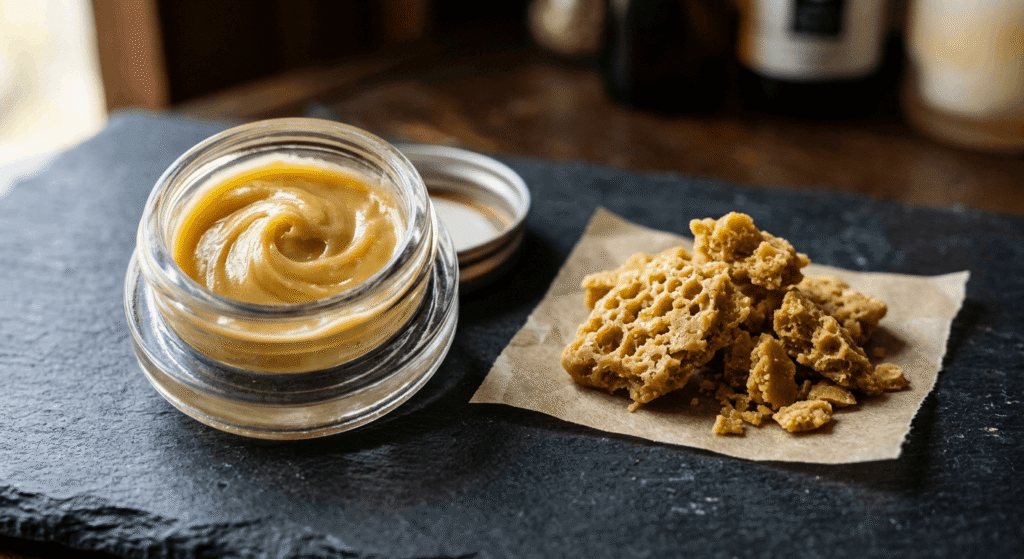
Badder and crumble are two types of THCa concentrate made through solvent-based extraction. The difference isn’t potency it’s what happens during purging. Badder gets whipped into a smooth, creamy texture. Crumble gets dried at lower temperatures for longer, producing a dry, porous consistency that breaks apart easily. Same cannabinoids, completely different feel in your hand and on your rig.
TL;DR
- Badder has a soft, buttery texture ideal for dabbing it scoops cleanly and melts evenly.
- Crumble wax is dry and brittle, making it the most versatile concentrate for mixing with flower.
- Both concentrates typically test between 70% and 85% THCa potency is determined by starting material, not texture.
- Terpene content is where they truly diverge: badder tends to preserve more volatile compounds during processing.
How Are Badder and Crumble Made?
Both start from the same place: a solvent-based extraction using butane or propane that pulls cannabinoids and terpenes from hemp flower. The crude oil then gets purged to remove residual solvent. That purging step is where they split.
Making Badder
After the initial extraction, the concentrate is whipped while purging. Agitating the oil introduces air and breaks down crystalline structures, creating that signature soft, homogenized consistency. The process runs at relatively controlled temperatures to preserve terpenes. The result looks and handles like thick cake frosting — smooth, stable, easy to work with a dab tool.
Making Crumble Wax
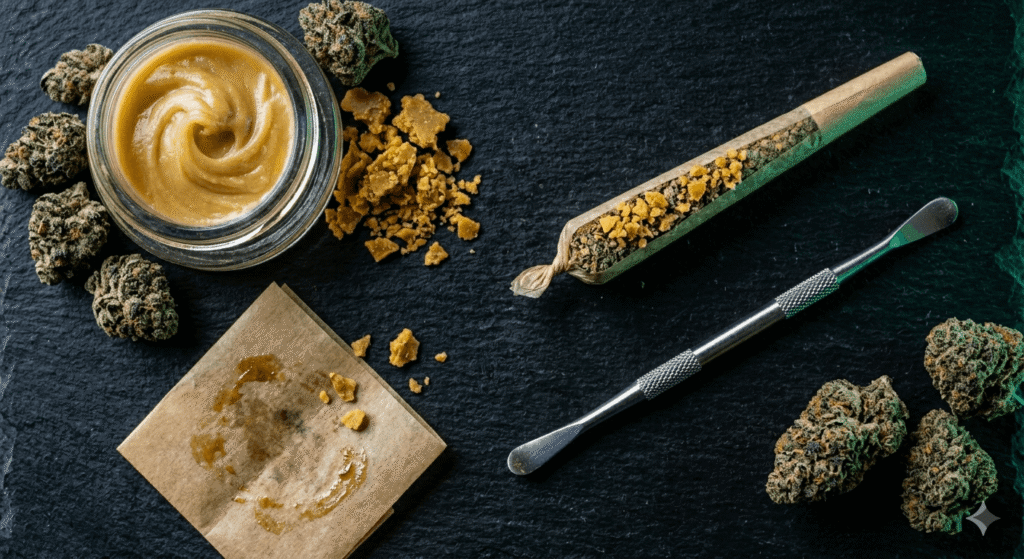
Crumble takes the opposite path. Instead of agitation, the extract is spread thin and purged at lower temperatures for an extended period. More moisture leaves the product over time. Volatile terpenes can escape during this longer drying window, which is why crumble tends to have a simpler aroma than badder made from the same source material. The end result is porous and brittle — dry enough to break apart with your fingers, similar in feel to dried honeycomb.
Does Texture Affect Potency?
No. This is one of the most common misconceptions in the concentrate world. Texture is a processing variable, not a potency signal.
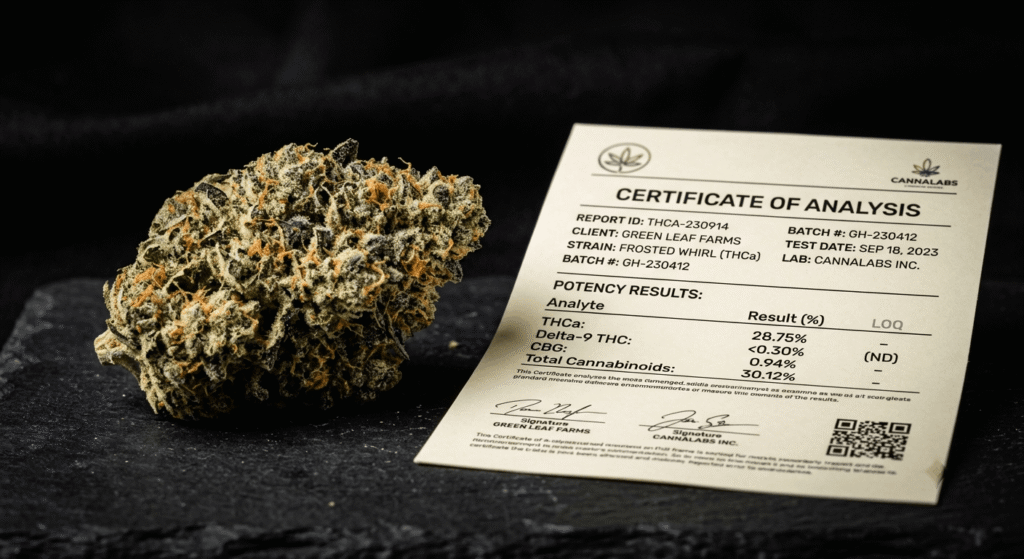
Both badder and crumble concentrates typically test somewhere between 70% and 85% THCa. The ranges overlap significantly, and where they land batch to batch depends far more on the genetics, growing conditions, and quality of the source flower than on whether the extract was whipped or dried. A premium indoor strain processed into crumble can easily outperform a mid-tier strain processed into badder. Always read the Certificate of Analysis rather than guessing by texture.
One thing worth knowing: “live” vs. “cured” can matter more to the final experience than the texture category. Live concentrates are made from flash-frozen fresh plant material, locking in terpenes that would otherwise degrade during a standard dry-and-cure process. A live crumble can taste richer and more complex than a standard cured badder, because the starting material arrived with more of its terpene profile intact.
How Do Badder and Crumble Differ in Flavor?
Flavor is where the texture decision actually matters.
Terpenes are fragile. They’re volatile aromatic compounds that don’t handle sustained heat well. Badder’s faster, more controlled process keeps more of them intact. Crumble’s extended purge at lower temperatures removes moisture effectively, but some of those lighter terpene compounds leave along with it. The practical result: badder tends to deliver a more complex, layered flavor that stays closer to the source strain’s profile. Crumble is still flavorful high-quality crumble from a terpene-rich strain can have real aroma and character but it’s generally less expressive than a comparable badder.
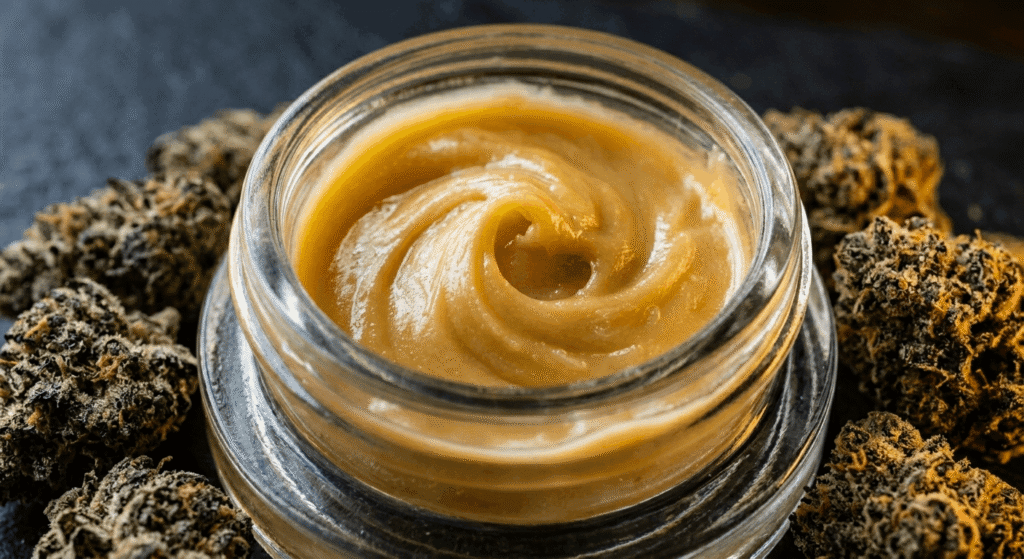
If you’re chasing a specific strain’s flavor and you want to taste the difference between a Gelato cut and a gas-forward cultivar, badder rewards that attention. If you’re prioritizing versatility and value over flavor complexity, crumble delivers.
What’s the Best Way to Use Each Concentrate?
How you consume these two concentrates is actually different enough to matter when you’re making a purchase decision.
Using Badder
Dabbing is where badder shines. It scoops cleanly onto a dab tool, doesn’t stick excessively, and melts evenly on a heated surface. Consistent texture means consistent dosing. Badder also works well in vaporizers designed for concentrates. It’s less ideal for mixing with flower because the sticky, soft consistency makes it harder to portion out and distribute evenly.
Using Crumble
Crumble is the most versatile concentrate you can buy. Dab it, yes but also sprinkle it directly into a bowl, roll it into a joint or blunt, or add it to a pre-roll for a significant potency boost. Its dry, porous texture breaks apart easily with fingers and blends smoothly with flower without leaving a sticky mess. For consumers who split time between concentrates and flower, crumble handles both situations cleanly.
Badder vs Crumble
| Feature | Badder | Crumble Wax |
|---|---|---|
| Texture | Soft, creamy, whipped | Dry, brittle, porous |
| Color | Light yellow to golden | Light golden to amber |
| Terpene preservation | Higher | Moderate |
| Typical THCa range | 70% to 85% | 70% to 85% |
| Best use | Dabbing, vaporizers | Dabbing, sprinkling on flower |
| Ease of handling | Easy, minimal mess | Very easy, no stickiness |
| Shelf stability | Good, avoid heat exposure | Excellent, very stable |
| Beginner-friendly | Yes | Yes |
Common Mistakes to Avoid With THCa Concentrates
Getting the most from badder or crumble comes down to a few handling decisions most people skip.
Storing in silicone is the biggest one. Silicone containers are everywhere and look convenient, but silicone absorbs terpenes over time, quietly stripping flavor from your concentrate. Glass or PTFE-lined jars are the right call for both badder and crumble.
Exposing concentrates to heat is another common error. Badder in a warm car or a sunny windowsill will degrade faster, with terpenes evaporating and texture changing. Both concentrates last longer in a cool, dark place — a sealed glass jar stored at room temperature away from light is the baseline. For long-term storage, brief refrigeration in an airtight container works, but let it return to room temperature before opening to avoid condensation getting into the product.
One more: assuming texture tells you anything about potency. It doesn’t. If a retailer can’t show you a current COA, that’s all the information you need about whether to buy. Check the lab results for THCa percentage and confirm the Delta-9 THC is under 0.3% which is the standard that makes hemp-derived concentrates federally compliant under the 2018 Farm Bill.
One note on the legal landscape: the federal definition of hemp is changing. As of November 12, 2026, a new total THC standard takes effect under P.L. 119-37, which will count THCa toward the 0.3% threshold. Until that date, hemp-derived THCa concentrates remain federally legal under the existing delta-9 standard. Always verify your state’s current rules before purchasing, as several states have already adopted stricter definitions. The full breakdown is available on the congress.gov CRS page covering the new hemp definition.
How to Choose Between Badder and Crumble
Your consumption habits are the deciding factor.
If you dab regularly and have a rig setup, badder is the cleaner experience. It handles predictably, preserves more of the strain’s terpene character, and melts consistently. Pair it with Co Exotics’ indoor flower collection if you want to compare the flower and concentrate experience from similar premium genetics.
If you move between concentrates and flower — or you’re newer to concentrates and want something low-mess and forgiving — crumble wax wins on versatility. It sprinkles evenly, stores well, and works in every consumption format without making a sticky mess. Browse Co Exotics’ concentrate selection to see current crumble and badder options with COAs.
Neither is the wrong choice. They’re different tools for different situations. Some consumers keep both on hand.
Frequently Asked Questions
1. Is badder stronger than crumble?
No. Both concentrates typically test between 70% and 85% THCa, and potency within that range is determined by the source material and extraction quality, not the texture. Check the COA for each specific product rather than making assumptions based on form.
2. What is crumble wax made from?
Crumble wax is made using solvent-based extraction, usually butane or propane, to strip cannabinoids and terpenes from hemp flower. The crude extract is then purged at lower temperatures for a longer period, removing moisture and producing that signature dry, brittle texture.
3. Can you put crumble in a joint?
Yes. Crumble is the most joint-friendly concentrate available. Its dry texture lets you break it apart easily and distribute it evenly inside a joint or rolled with flower in a blunt. It burns cleanly and doesn’t create the sticky handling issues that wetter concentrates can.
4. How should I store badder concentrate?
Store badder in a glass or PTFE-lined jar in a cool, dark place. Avoid silicone containers, which absorb terpenes over time. Keep it away from heat and sunlight. For longer storage, airtight refrigeration works just let it return to room temperature before opening to prevent moisture from getting in.
5. What does “live” mean on a concentrate label?
- Live: the plant was flash-frozen immediately after harvest, before it dried and cured.
- Cured: the plant went through a standard dry-and-cure process before extraction.
- Live concentrates lock in terpenes that would otherwise degrade, so live badder or live crumble typically has more aroma and flavor complexity than cured versions.
6. Does badder or crumble taste better?
Badder generally preserves more terpenes because its processing is faster and more controlled. That usually translates to a more expressive flavor. Crumble can still taste excellent, especially when made from high-terpene strains or produced as a live concentrate but the extended purge does cost some volatile aromatics along the way.
7. Are THCa concentrates legal to buy online?
Under the current federal framework, hemp-derived THCa concentrates that test below 0.3% Delta-9 THC are legal to purchase and ship in states where hemp products are permitted. State laws vary, so always confirm your state’s rules. Federal definitions are also changing effective November 12, 2026. See congress.gov for the official legislative language.
Conclusion
Badder vs crumble comes down to one question: how do you like to consume? Badder delivers a terpene-forward dabbing experience in a smooth, workable texture. Crumble wax handles every format rigs, bowls, joints, blunts without any fuss. Potency between the two is essentially the same at comparable quality levels. The COA tells you more than the texture ever will. Check Co Exotics’ lab results page to see exactly what’s in every product before you buy, and browse the full concentrates lineup to find the right form for your setup.