Quick Answer Box: THCa (tetrahydrocannabinolic acid) and THC (delta-9 tetrahydrocannabinol) are closely related cannabinoids with one critical difference: THCa is non-psychoactive in its raw form, while THC produces a high. THCa converts to THC through decarboxylation a heat-triggered reaction which is why smoking or vaping THCa flower delivers the same effects as traditional THC.
What Is THCa vs THC?
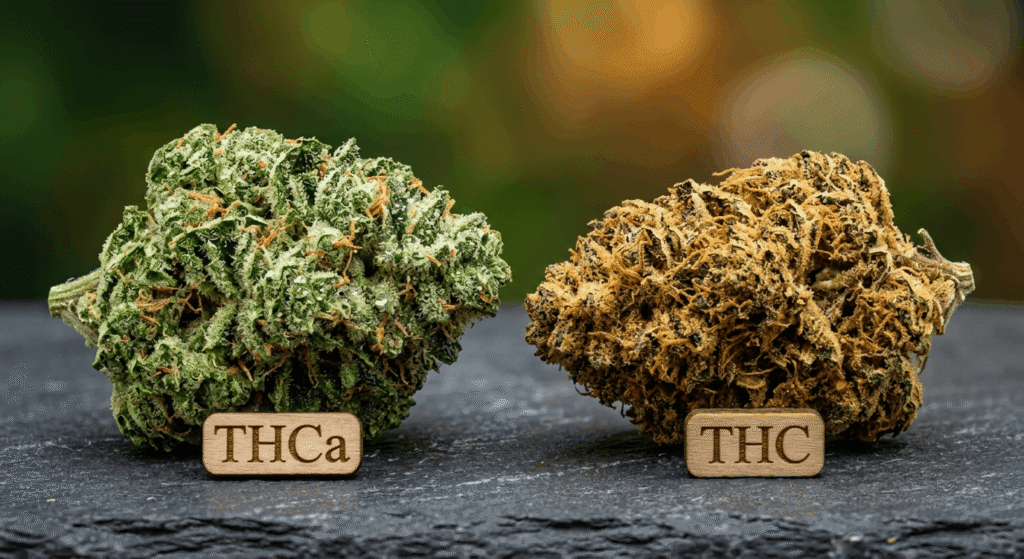
THCa and THC are both cannabinoids found in the cannabis plant, but they work very differently in the body. THCa is the raw, acidic precursor form present in fresh and unheated cannabis. THC is what THCa becomes once heat is applied. The single letter “A” in THCa stands for acid that extra carboxyl group is what separates a non-psychoactive compound from a psychoactive one.
TL;DR
- THCa is non-psychoactive in raw form; THC binds to CB1 receptors and produces a high
- Heat converts THCa to THC through a process called decarboxylation smoking and vaping trigger this instantly
- About 87.7% of THCa converts to THC during decarboxylation, meaning a 25% THCa flower yields roughly 22% active THC
- THCa flower is currently federally legal under the 2018 Farm Bill, but a new federal definition takes effect November 12, 2026
- Drug tests don’t detect raw THCa but smoked or vaped THCa produces THC metabolites that will cause a positive result
What Is the Difference Between THCa and THC?
The core difference between THCa and THC comes down to molecular structure and how each one interacts with your endocannabinoid system. THCa carries an extra carboxyl group attached to its molecule. That group acts as a blocker it physically prevents the compound from fitting into the CB1 receptors in your brain that produce psychoactive effects. No CB1 binding means no high, no matter how much raw THCa flower you consume.
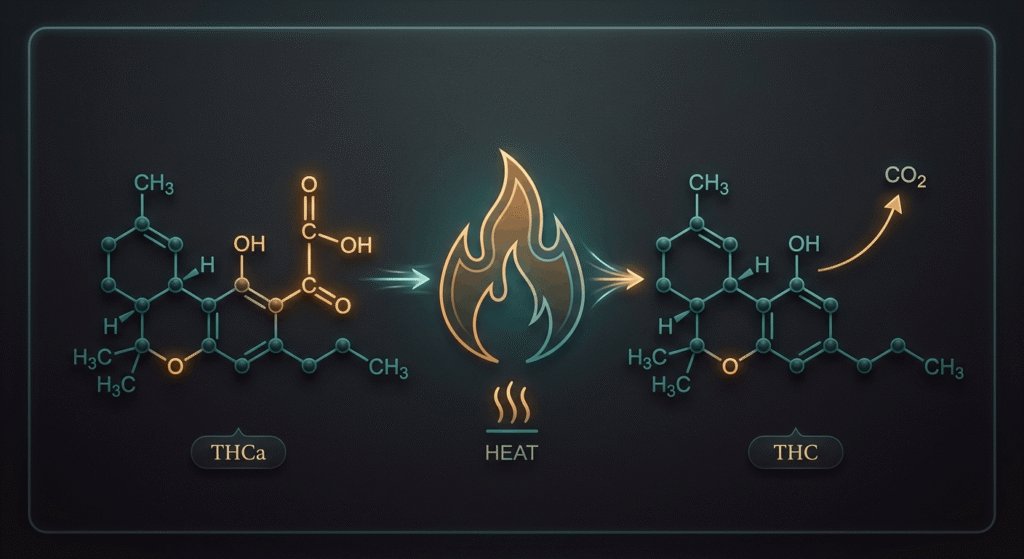
Remove that carboxyl group with heat, and the molecule reshapes into THC. It now fits CB1 receptors perfectly. That’s decarboxylation in a nutshell: one chemical transformation, completely different effects.
The Carboxyl Group: Small Molecule, Big Difference
The molecular weight difference between THCa and THC is roughly 12.3%. That extra mass is the carboxyl group that breaks away as carbon dioxide during decarboxylation. It sounds minor, but it’s the entire reason why raw cannabis and heated cannabis feel so different. Think of it as a key that’s slightly the wrong shape — it won’t turn the lock until the jagged bit gets filed off.
CB1 Receptors and Psychoactivity
THC mimics the body’s natural endocannabinoids and triggers CB1 receptors concentrated in the brain, spinal cord, and nervous system. This is what drives euphoria, altered perception, relaxed muscles, and increased appetite. THCa, in its raw state, doesn’t efficiently bind to CB1 receptors at all. Some research points to potential anti-inflammatory, neuroprotective, and anti-nausea properties for raw THCa but those effects work through entirely different biological pathways, not CB1 activation.
How Does Decarboxylation Convert THCa to THC?
Decarboxylation is the heat-driven chemical reaction that converts THCa into active THC. It’s automatic when you light a joint, hit a vape, or bake cannabis into edibles. The process strips the carboxyl group from the THCa molecule and releases it as CO2 — what remains is delta-9 THC ready to bind with CB1 receptors.
Time and temperature both matter. Slow, low-temperature decarboxylation (like an oven at 220-245°F for 30-45 minutes) works best for edibles. High-heat combustion at 600-900°C during smoking converts THCa in milliseconds. That’s why inhalation produces near-instant effects.
How Decarboxylation Works
- Start with raw THCa flower. Fresh, unheated cannabis contains primarily THCa, not THC. The percentage listed on a flower label is almost always the THCa content.
- Apply heat. Light a pre-roll, activate a vape, or place ground flower in an oven. Any heat source above roughly 220°F initiates the reaction.
- The carboxyl group detaches. The molecular bond breaks, releasing CO2 and restructuring the compound into delta-9 THC.
- THC enters the body. Through inhalation, THC reaches the bloodstream via the lungs within seconds. Via edibles, absorption happens through the GI tract over 1-3 hours.
- CB1 receptors activate. THC binds with receptors in the brain, triggering psychoactive effects that typically last 1-3 hours when smoked, and 4-6 hours when eaten.
One thing many consumers don’t realize: even long-term storage causes slow, passive decarboxylation. Old, improperly stored THCa flower loses potency gradually as THCa naturally converts to THC over time without any heat at all.
Is THCa the Same as THC Once Heated?
Functionally, yes once decarboxylated, the THC produced from a THCa hemp flower is chemically identical to the THC from a dispensary marijuana product. Your body can’t tell the difference.
The conversion isn’t perfect, though. Under ideal lab conditions, 100mg of pure THCa yields about 87.7mg of THC. Real-world losses are higher. Combustion (smoking) destroys 15-30% of available cannabinoids through pyrolysis the high temperatures that produce the high also burn off some of what you’re trying to consume. Vaporizing at 175-220°C is more efficient, which is one reason many users report stronger effects from vaporized flower compared to smoked flower at the same THCa percentage.
Concentrated THCa products like THCa dabs and diamonds can test 70-90% THCa. That’s serious potency once activated.
THCa vs THC: Which Is Stronger?
Raw THCa produces zero psychoactive effects, so in that sense it’s not comparable to THC at all. Potency only enters the conversation after decarboxylation.
Once heated, a high-THCa strain (25%+ THCa) converts to roughly 22% active THC. That sits in the same tier as mid-to-premium dispensary flower. So in practical terms, premium THCa hemp flower and high-shelf dispensary cannabis can deliver similar experiences once the chemistry kicks in.
Here’s what the potency comparison actually looks like across product types:
| Product Type | Typical THCa % | Approx. THC After Decarb | Effects Intensity |
|---|---|---|---|
| THCa Budget Flower | 15-18% | 13-16% | Moderate |
| THCa Indoor Flower | 20-28% | 18-25% | High |
| THCa Concentrates (Badder/Crumble) | 60-80% | 53-70% | Very High |
| THCa Dabs / Diamonds | 80-95% | 70-83% | Intense |
| Dispensary THC Flower | 18-30% THC | Already active | High |
| Dispensary THC Concentrate | 60-90% THC | Already active | Very High–Intense |
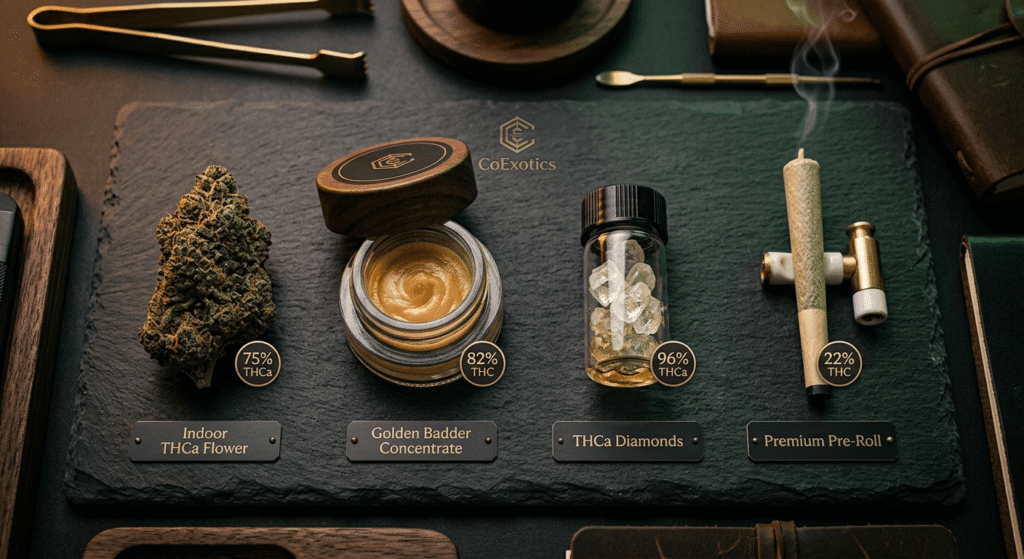
Raw THCa, consumed without heat like juiced cannabis or cold tinctures won’t produce any of the effects in this table. That’s a completely different use case, one pursued by people specifically looking for potential anti-inflammatory benefits without intoxication.
THCa Side Effects vs THC Side Effects
Because raw THCa doesn’t activate CB1 receptors, its side effect profile looks nothing like THC’s. Most of the side effects associated with cannabis come from activated THC.
THC side effects are well-documented and can include euphoria or intoxication, impaired short-term memory, increased heart rate, dry mouth, red eyes, anxiety or paranoia (particularly in new users or at high doses), and sedation. Indica-dominant strains tend to amplify the sedative side.
Raw THCa side effects are not well-studied. Current research points to a generally mild profile with no intoxicating effects. Some users report minor digestive sensitivity when consuming large amounts of raw cannabis material.
The situation changes the moment heat is applied. Smoked or vaped THCa flower becomes active THC, and all of THC’s side effects apply. If you’re new to cannabis, the best approach is to start with a low dose and monitor how your body responds before increasing.
What Is the Legal Status of THCa vs THC in the USA?
This is where THCa and THC split sharply at least for now.
THC from marijuana remains a Schedule I controlled substance under federal law. It’s legal for medical or recreational use in many states, but illegal federally and in states without cannabis reform laws.
THCa hemp flower has operated in a legal gray zone since the 2018 Farm Bill, which defined hemp as cannabis containing less than 0.3% delta-9 THC on a dry-weight basis. Because raw THCa isn’t delta-9 THC, hemp-derived THCa products that met that threshold were federally permitted. This opened the door to THCa flower, THCa concentrates, and other products being sold legally online across most of the US.
That’s changing. On November 12, 2025, President Trump signed legislation (Section 781 of the Continuing Appropriations Act, 2026) that redefines hemp to include total THC meaning THCa counts toward that 0.3% threshold. The new definition takes effect November 12, 2026. After that date, high-THCa hemp products will no longer qualify as legal hemp under federal law.
Additionally, the House passed the 2026 Farm Bill (H.R. 7567) in April 2026, which codifies the total THC standard. As of June 2026, the bill awaits Senate action.
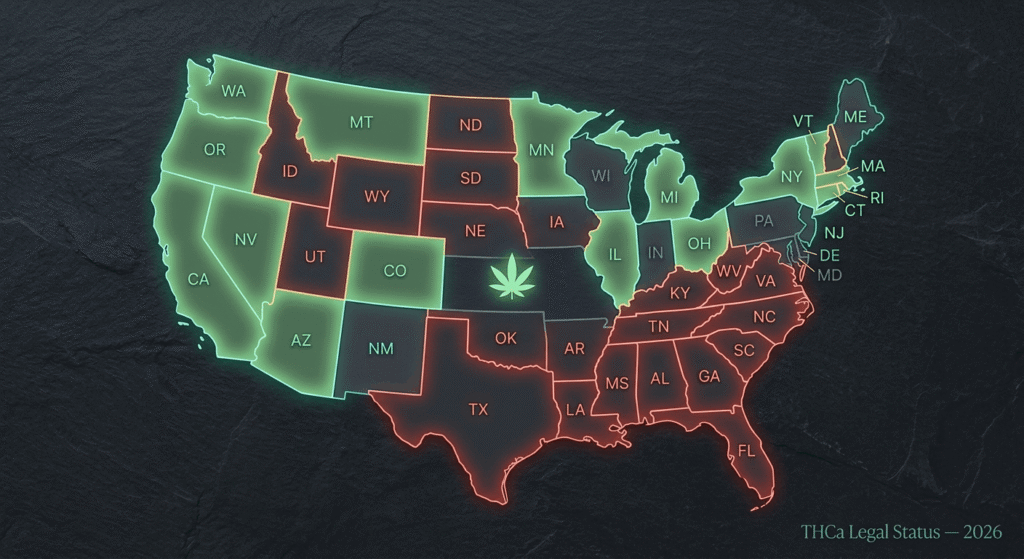
At the state level, at least seven states Alaska, Arkansas, Delaware, Hawaii, Idaho, Iowa, and Rhode Island have already banned THCa outright. Eight more restrict it to licensed dispensaries. Check your state’s current hemp laws before purchasing. For federal law specifics, see the official Congressional Research Service summary at congress.gov.
Does THCa Show Up on a Drug Test?
Raw, unheated THCa won’t typically trigger a positive result on a standard drug test. Standard urine screens detect THC-COOH, the metabolite your body produces after processing active delta-9 THC not raw THCa itself.
Here’s the catch: if you smoke, vape, or cook with THCa flower, the decarboxylation that happens during consumption converts it into THC. Your body then produces the same THC-COOH metabolite that any drug test screens for. The test has no way to know whether your THC came from a dispensary or a “legal” hemp product.
Detection windows after heating THCa flower:
- Single use: 3-5 days in urine
- Occasional use (a few times per week): 5-10 days
- Daily use: 15-30 days
- Heavy chronic use: 30-60+ days
DOT-regulated employees CDL holders, pilots, transit workers face zero exceptions. A December 2025 DOT compliance notice confirmed that marijuana testing requirements remain unchanged regardless of the source or legal status of the THC. Don’t assume a compliant hemp product provides any protection in a safety-sensitive employment context.
Common Mistakes to Avoid With THCa vs THC
Assuming THCa won’t get you high. Raw THCa won’t but the moment you light it, vape it, or bake it, that changes instantly. A lot of first-time THCa buyers are caught off guard by this.
Ignoring the label numbers. The THCa percentage on the label is the relevant number for potency. A flower labeled 25% THCa delivers roughly 22% active THC after smoking. Don’t compare the raw THCa number against a dispensary’s THC number as if they’re the same measurement.
Thinking “legal hemp” means “safe for drug tests.” It doesn’t. Legal status and drug test results are unrelated. THC metabolites don’t carry a certificate of origin.
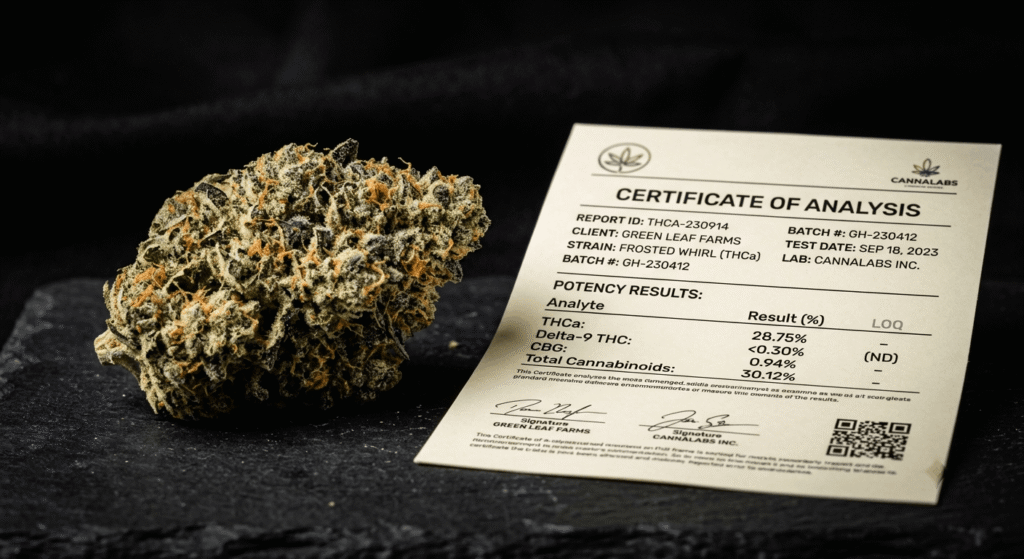
Buying without lab results. Unverified THCa products sometimes test well above 0.3% delta-9 THC, which means they’re not compliant to begin with. Always source from brands that publish third-party lab results for every batch.
Waiting too long to buy if you’re in a legal state. The November 2026 federal deadline is real. The regulatory landscape for hemp-derived THCa products will look very different by year’s end.
Which Should You Choose
The answer depends entirely on what you’re looking for.
Choose THCa hemp flower if:
- You want a legal, shippable option and live in a state where marijuana isn’t available
- You prefer to shop online for high-quality indoor flower with lab-verified potency
- You’re interested in raw consumption (juicing, cold tinctures) for non-psychoactive wellness benefits
- You want flexibility THCa can remain non-psychoactive until you decide to heat it
Choose dispensary THC products if:
- You live in a state with licensed cannabis retail and prefer in-person service
- You want pre-decarboxylated options like infused edibles or THC distillate
- You value a tightly regulated supply chain with state-mandated lab testing
The bottom line: once heated, these two compounds converge. A 25% THCa hemp flower and a 22% dispensary THC flower will deliver a very similar experience. The main variables are legal access, price point, and how much you care about the source.
Explore the full selection of THCa hemp flower and concentrates with verified lab results at Co Exotics.
Frequently Asked Questions
1. Is THCa the same as THC?
No. THCa is the raw, acidic precursor found in unheated cannabis. It doesn’t produce psychoactive effects on its own. THC is the activated form that results after decarboxylation. They share the same base molecule but behave completely differently in the body until heat converts one into the other.
2. Does THCa get you high?
Raw THCa doesn’t produce a high. It can’t bind effectively to CB1 receptors because of its extra carboxyl group. Heat changes that. Smoking, vaping, or cooking with THCa flower triggers decarboxylation and converts it to active THC, which does produce psychoactive effects. For a deeper look, see our guide on does THCa get you high.
3. THCa vs THC: which is stronger?
Neither is inherently “stronger” they serve different purposes. Raw THCa produces no psychoactive effects; THC does. After decarboxylation, high-THCa flower (25%+) converts to roughly 22% active THC, which is on par with strong dispensary cannabis. The potency difference comes down to conversion efficiency and consumption method, not which compound starts stronger.
4. What is the legal status of THCa in the USA?
Under the 2018 Farm Bill, hemp-derived THCa products with less than 0.3% delta-9 THC have been federally legal. That changes November 12, 2026, when new legislation redefines hemp using a total THC standard that includes THCa. At least seven states have already enacted independent bans. Always verify your state’s current laws before purchasing.
5. Will THCa dabs show up on a drug test?
Yes. THCa dabs are consumed through heat, which instantly converts THCa to THC. Your body processes that THC and produces THC-COOH exactly what standard drug tests detect. There’s no workaround for this. If you face workplace or legal drug testing, treated THCa products carry the same risk as any other cannabis product.
6. What are THCa side effects?
Raw, unheated THCa has a limited side effect profile with no intoxicating effects. Once heated, however, the resulting THC carries the full range of typical cannabis side effects: euphoria, altered perception, possible anxiety at high doses, dry mouth, red eyes, and increased heart rate. New users should start with low doses regardless of whether the product is labeled THCa or THC.
7. Can I juice raw THCa flower?
Yes. Juicing fresh, unheated cannabis preserves THCa in its raw, non-psychoactive form. Some consumers do this specifically to access the potential anti-inflammatory benefits of raw cannabinoids without any intoxicating effects. Heating the juice even slightly risks initiating decarboxylation, so it’s typically consumed cold.
Conclusion
THCa vs THC is really a question of chemistry and context. In raw form, THCa and THC are miles apart one produces no high, one does. Apply heat through smoking, vaping, or cooking, and that gap closes completely. Understanding decarboxylation is the key to understanding THCa hemp flower, because a 25% THCa strain is, in effect, a very potent cannabis product the moment you light it.
The legal landscape matters too, especially in 2026. The federal definition of hemp is shifting to a total THC standard that includes THCa, with new rules taking effect in November 2026. If you’re shopping now, buy from brands with transparent third-party lab results and clear potency data.
Co Exotics publishes full lab results on every product. Browse the current selection of THCa flower and concentrates and shop with confidence.