Quick Answer Box: Cannabis tariffs in 2025 don’t target cannabis flower directly, but they drive up costs on every imported input your brand depends on: vape hardware, packaging, cultivation equipment, and extraction supplies. Protecting your brand means auditing your supply chain now, diversifying sourcing, and building compliance strategies that hold up under shifting trade regulations.
What Are Cannabis Tariffs?
Cannabis tariffs are import duties applied to the goods cannabis and hemp brands rely on to operate. The plant itself is grown domestically, so no direct tariff hits it. But the hardware, packaging, and equipment wrapping your products? Most of it ships from China, and that’s exactly where tariff exposure concentrates. Since early 2025, those costs have escalated sharply.
TL;DR
- Vape hardware from China now carries an effective import duty exceeding 50%, with rates hitting as high as 180% on certain components
- Packaging, glass jars, child-resistant containers, and pre-roll supplies have all seen price hikes under the same trade policy framework
- Brands sourcing hardware from Malaysia or Vietnam can cut landed costs by 46% versus tariffed Chinese alternatives
- Compliance documentation, domestic supplier contracts, and locked pricing agreements are your three fastest risk-reduction levers
How Are Cannabis Tariffs Actually Hitting Brand Operations?
Most cannabis brand owners expect regulatory headaches to come from state licensing desks or Farm Bill amendments. Tariffs are no longer a geopolitical footnote. The new duties hit costs on everything from lighting equipment to packaging, and in an industry already running thin margins, even small supply chain increases compound fast.
The pain points cluster in three categories.
Vape Hardware
Cannabinoid products using vaping hardware imported from China have seen prices nearly triple through tariff increases alone. Tariffs on vaping hardware currently stand at 180%: a 35% carry-over from Trump’s first term, plus two 10% tranches added in early 2025. About 80% of cartridge hardware, mouthpieces, and atomizers are Chinese-manufactured. Companies including PAX initially absorbed the added cost to hold shelf prices, then began relocating manufacturing to nearshore partners, raising unit costs by up to $0.50 per cartridge.
Packaging
Glass jars, pre-roll tubes, and child-resistant containers have all seen price hikes. These products have traditionally been sourced abroad, and even with reduced tariff rates, shifting to U.S.-based production is slow. Domestic manufacturers still lack the scale and regulatory specialization needed to replace overseas suppliers at volume.
Cultivation and Extraction Equipment
Grow lights, irrigation systems, and climate control technology are predominantly imported. The steel used in stainless extraction columns now carries a 25% import duty, pushing equipment costs up 18 to 22% and delaying ROI for concentrate producers. Small operators lack the purchasing power of MSOs and feel this pressure first.
What Do Current Trade Regulations Mean for Hemp Compliance?
Trade regulations and cannabis regulatory compliance now intersect in ways most operators haven’t mapped. Tariff volatility is turning supply chain risk management into a daily discipline. The bigger problem isn’t just higher cost it’s unpredictability that makes planning difficult.
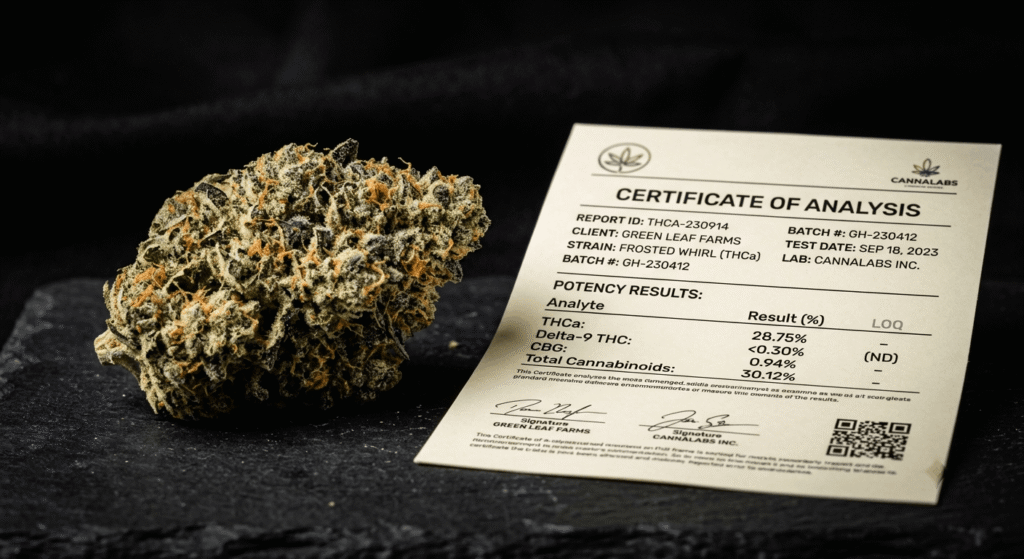
2025 added a second compliance front. On November 12, 2025, legislation signed by President Trump effectively banned most intoxicating hemp-derived THC products. The new law redefines legal hemp as cannabis with a total THC concentration (including THCA) of no more than 0.3% on a dry-weight basis, with products capped at 0.4 milligrams of total THC per container.
That puts brands in a two-front bind: track cost exposure from trade policy and product legality under tightening federal definitions simultaneously. The USDA Domestic Hemp Production Program at ams.usda.gov/rules-regulations/hemp governs hemp production rules under 7 CFR Part 990 and is the authoritative source for compliance requirements.
How Do You Build a Tariff Mitigation Strategy That Actually Works?
Tariff mitigation isn’t one move. It’s a series of sourcing, contracting, and inventory decisions made before costs hit your invoices.
Step 1: Map Every Import Touchpoint
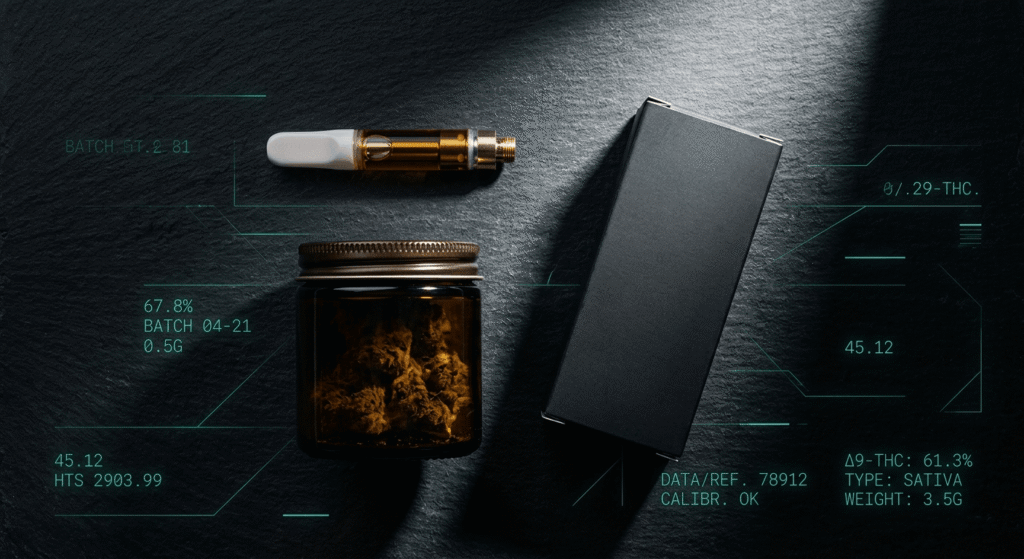
Audit your full bill of materials. List every SKU sourced from outside the U.S.: hardware models, packaging specs, fertilizer brands, extraction columns. Flag each one against current HTS codes. You can’t mitigate what you haven’t catalogued.
Step 2: Shift Hardware Sourcing to Southeast Asia
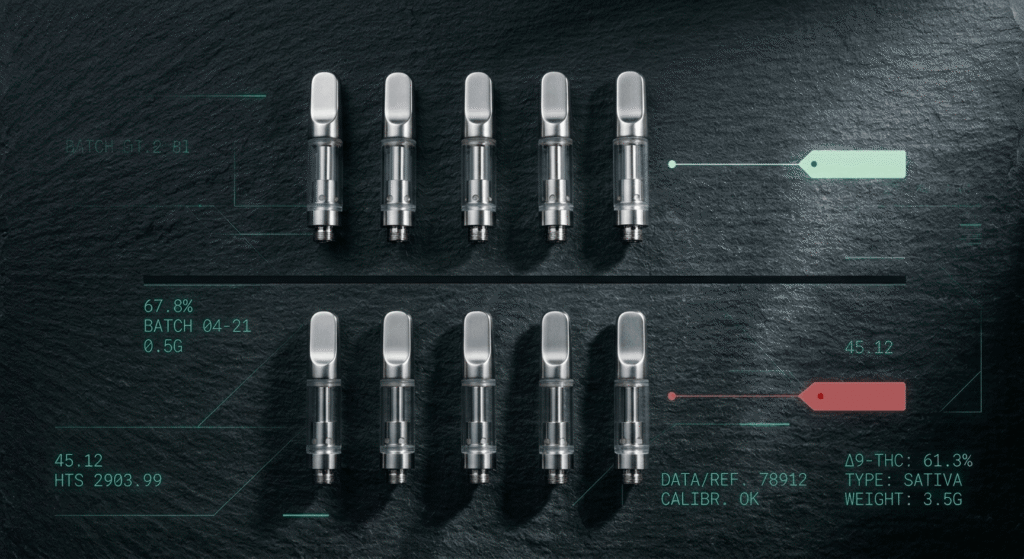
Malaysian and Indonesian manufacturers charge 10 to 20% more than Chinese factories but avoid the 125% Section 301 surcharge entirely. The math: a Chinese vape at $1.50 plus 145% duties lands at $3.675. The same unit from Malaysia at $1.80 plus 10% duty lands at $1.98. That’s a 46% savings despite the higher base price. Budget 60 to 90 days to qualify new suppliers and test product quality.
Step 3: Lock Pricing and Build a Domestic Backup
Negotiate 90-day fixed pricing windows with existing suppliers. A locked rate contract shifts volatility risk to the supplier rather than your margin. At the same time, qualify one domestic packaging supplier now, even at 15 to 25% higher cost. One packaging company cited by MJBizDaily saw its tariff cost per container jump from $2,000 to $20,000 in a single policy cycle. Having a domestic fallback prevents that scenario from becoming a production stoppage.
Step 4: Use Bonded Warehousing and Strategic Pre-Orders
Place larger orders before announced tariff increases. Smart operators track policy announcements and pre-order before new rates hit supplier quote sheets. Bonded warehousing lets you defer duty payments until goods enter commerce, which protects cash flow during periods of policy uncertainty.
Common Mistakes to Avoid With Cannabis Tariff Planning
Treating tariff policy as stable. Rates have changed multiple times in a single quarter. Building annual cost models on a fixed tariff rate is how brands get blindsided mid-year.
Ignoring HTS code classification. You control classification, sourcing, and timing. Misclassifying imports means overpaying for months before anyone notices. Master these three levers and you move from tariff victim to informed negotiator.
Neglecting the regulatory-tariff intersection. With an effective date of November 12, 2026, brands need to review product formulations for compliance with new THC and THCA limits and audit supply chains for seed and ingredient standards. A tariff audit is the right time to run a compliance audit simultaneously.
Which Cannabis Risk Management Approach Fits Your Brand Size?
| Brand Size | Primary Risk | Best Tariff Strategy | Compliance Priority |
|---|---|---|---|
| Solo/micro | Vape hardware costs | Southeast Asia spot sourcing | COA documentation, reformulation audit |
| Small brand (under $1M) | Packaging + hardware | Locked pricing agreements | State-by-state product review |
| Mid-market ($1M–$10M) | Across all inputs | Diversified supplier base, bonded warehousing | Full supply chain audit, 280E planning |
| Multi-state operator | Volume and currency risk | Domestic manufacturing investment | Regulatory counsel on H.R. 5371 |
Brands under $1M typically can’t absorb 18 to 22% equipment cost increases without a pricing response. Incremental quarterly adjustments land better with wholesale buyers than one large correction.
Frequently Asked Questions
1. Do cannabis tariffs apply to hemp flower itself?
No. Hemp flower is grown domestically and isn’t subject to import tariffs. Tariff exposure comes from imported inputs: vape hardware, packaging, cultivation equipment, and extraction tools.
2. What is the current tariff rate on cannabis vape hardware from China?
Tariffs on vaping hardware stand at 180%, with a 35% carry-over from Trump’s first term plus two 10% tranches added in early 2025. A temporary reduction to 30% is in effect while trade talks continue, but the rate could return to 129% or higher.
3. Can I avoid tariffs by sourcing from Vietnam or Malaysia?
Partially. These manufacturers avoid the 125% Section 301 surcharge, making total landed costs significantly lower despite a higher base factory price. Allow 60 to 90 days for supplier qualification and expect some design customization limits.
4. How does the 2025 hemp law change affect tariff planning?
The November 2025 legislation caps total THC including THCA at 0.3% on a dry-weight basis. Brands reformulating to comply may change packaging or hardware specs, creating new tariff exposure that needs to be assessed as part of the reformulation process.
5. Should small brands raise prices to offset tariff costs?
Yes, incrementally. Rising costs will almost inevitably be passed on to customers because margins are too thin to absorb indefinitely. Quarterly wholesale price adjustments communicated transparently are more sustainable than absorbing losses and adjusting sharply later.
Conclusion
Cannabis tariffs won’t disappear with the next policy announcement. The trade regulations reshaping your input costs are layered across multiple HTS codes and volatile enough that a rate modeled in January may be obsolete by April. That’s the real risk: not any single tariff increase, but the assumption that today’s number is the planning number.
Treat cannabis risk management as an ongoing discipline. Audit your supply chain now. Qualify a Southeast Asian hardware vendor this quarter. Lock a domestic packaging backup. Map your product line against the new total THC definition before November 2026 arrives. Protecting your brand from rising cannabis tariffs starts with removing the variables you can actually control.