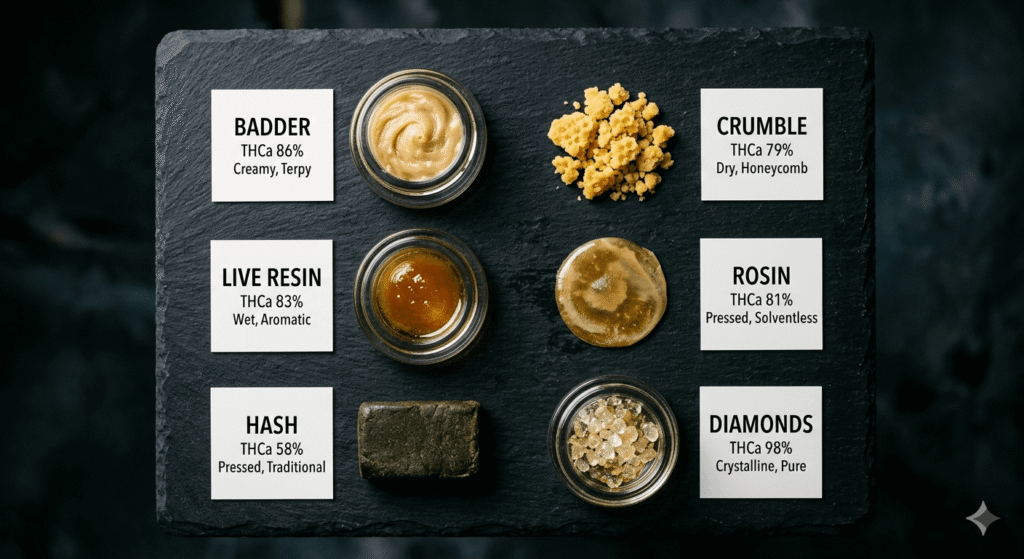
Quick Answer Box: THCa concentrates are highly refined hemp extracts that isolate tetrahydrocannabinolic acid in potent, concentrated form. When heated through dabbing or vaping, THCa converts to Delta-9 THC via decarboxylation. The most common types of THCa concentrates include badder, crumble, live resin, rosin, hash, and diamonds each with a unique texture, potency range, and terpene profile.
TL;DR
- THCa concentrates deliver far higher potency than flower, typically testing between 60–99% THCa.
- Heat activates them: dabbing or vaping triggers decarboxylation, converting THCa to Delta-9 THC.
- Common types include badder, crumble, live resin, rosin, hash, diamonds, and sugar.
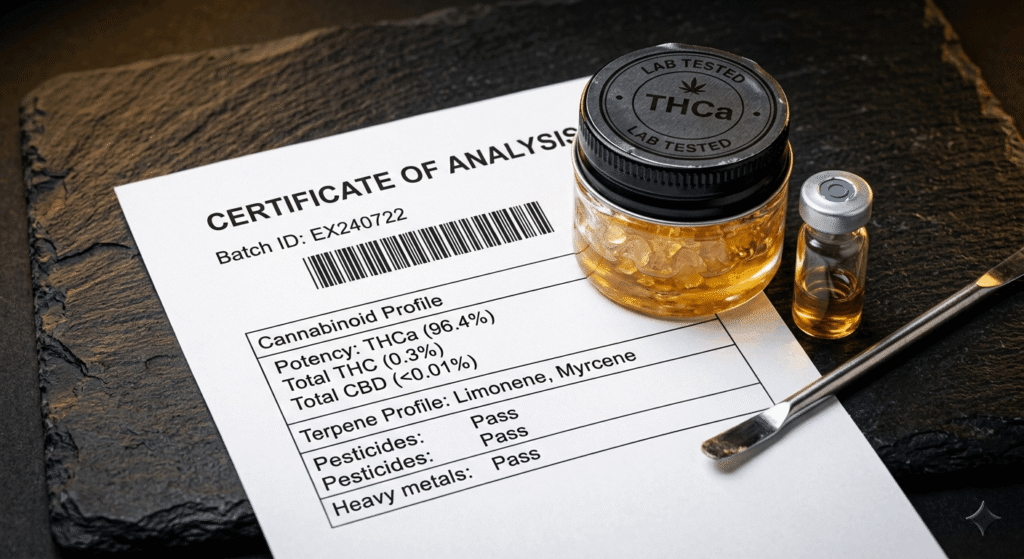
- Always buy lab-tested concentrates with a current certificate of analysis (COA).
What Are THCa Concentrates?
THCa concentrates are cannabis extracts that preserve tetrahydrocannabinolic acid before any heat is applied. In raw form, THCa is non-intoxicating. Apply heat through a dab rig, vaporizer, or even a bowl and decarboxylation converts it into Delta-9 THC. That’s what delivers the effects. Concentrates are processed from hemp flower to remove plant material and isolate cannabinoids and terpenes into a dense, highly potent product. THCa concentrates are legally derived from hemp when the Delta-9 THC content stays below 0.3% on a dry-weight basis under the 2018 Farm Bill.
What’s the Difference Between THCa Concentrates and Regular Flower?
Flower and concentrates start from the same plant. After that, the paths split completely.
Hemp flower contains anywhere from 15–30% THCa by dry weight. That’s already strong. THCa concentrates take that flower and strip out everything except the target cannabinoids and terpenes. The result is a product that routinely tests at 60–99% THCa, depending on the type.
Potency
A small rice-grain-sized amount of concentrate carries roughly the same active compound as a full bowl of flower. Beginners should treat concentrates with respect. Start with 10–25mg and wait before taking more.
Method
Flower burns. Concentrates are typically dabbed on a heated nail or banger, or loaded into a concentrate vaporizer. Dabbing temperatures of 350–450°F are standard. Lower temps preserve terpenes; higher temps push potency.
Experience
Because concentrates absorb quickly through inhalation, effects usually arrive within minutes. The onset is faster and often more intense than smoking flower.
Which One Is Right for You?
This is where most beginners get lost. Six main formats dominate the market in 2026. Each behaves differently in your hands, on a dab tool, and in terms of flavor.
Badder / Budder
Badder is whipped during the purging process, giving it a soft, creamy texture that’s easy to scoop with a dab tool. It doesn’t crumble, doesn’t run, and sits cleanly on the nail. THCa badder typically tests between 70–90% THCa. Most first-time concentrate users do better with badder than any other type because the texture is predictable and forgiving. You can find Co Exotics’ THCa badder in the concentrates section.
Crumble
Crumble has a dry, honeycomb-like consistency. It breaks apart easily, which makes measuring simple. It’s also versatile — sprinkle it on top of flower in a bowl, or dab it straight. Potency generally lands in the 80–95% THCa range. The texture means it can be messy if you tip the jar. Browse Co Exotics’ THCa crumble options for current strains.
Live Resin
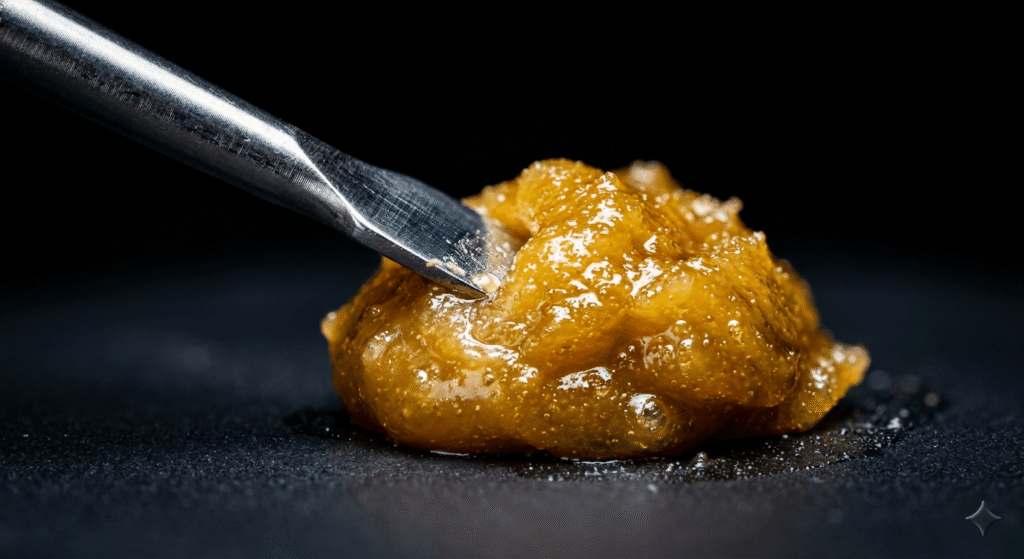
Live resin is extracted from freshly frozen hemp flower, which means the plant goes straight from harvest into extraction without any drying or curing phase. That preservation step locks in volatile terpenes that would otherwise evaporate. Live resin typically tests 75–90% THCa with rich, complex aroma. It comes in several textures sauce, sugar, and badder all starting from the same live resin base. Check out Co Exotics’ live resin collection for strain-specific options.
Rosin
Rosin stands out because it’s made without any chemical solvents. Processors use heat and pressure alone to squeeze cannabinoids and terpenes from the flower, kief, or hash. No butane, no ethanol. The result is considered the cleanest form of cannabis concentrate available. Potency usually lands between 65–85% THCa. It costs more than solvent-based options, but many consumers pay the premium specifically for a solvent-free product. See the rosin lineup at Co Exotics.
Hash
Hash is one of the oldest concentrate forms around. Modern hash made from hemp uses ice-water extraction to separate trichome heads from plant material. Bubble hash and dry-sift hash are the most common formats. Potency varies widely, from 40% on the lower end to 70%+ for premium grades. Hash is typically smoked or crumbled into a bowl. Browse Co Exotics’ hash selection for lab-tested options.
Diamonds and Sugar
THCa diamonds are crystalline structures that grow slowly in a supersaturated solution. Some batches test at 95–99% THCa, making diamonds the most concentrated form available. On their own they’re nearly flavorless most of the terpenes separated into a surrounding liquid called terp sauce during formation. Sugar is a similar product with a wet, grainy texture from fine THCa crystals sitting in terpene-rich sauce. Both formats are for experienced users who want maximum potency or maximum flavor from a single dab.
How Do Terpenes Affect Your THCa Dabs Experience?
Terpenes are the aromatic compounds that give each cannabis strain its distinct smell and flavor. In concentrates, they also shape the overall character of the experience.
A 70% THCa concentrate with a rich terpene profile often feels more nuanced and full-bodied than a 90% isolate with almost no terpenes. Myrcene, commonly found in indica-leaning strains, contributes heavier, more sedating notes. Limonene brings brighter, uplifting energy. Pinene adds a clean, sharp edge. Live resin and rosin capture the broadest terpene range because the plant is either fresh-frozen or processed cold, before terpenes degrade.
Terp sauce specifically refers to a terpene-rich liquid that forms alongside THCa diamonds. It’s the most terpene-forward product on the market. If flavor is your priority, terp sauce or live resin are the concentrates to look at.
What Makes the Best THCa Concentrates Worth Buying?
Not every concentrate on the shelf earns that label. A few things separate a premium product from one that’s been poorly processed.
Lab Testing
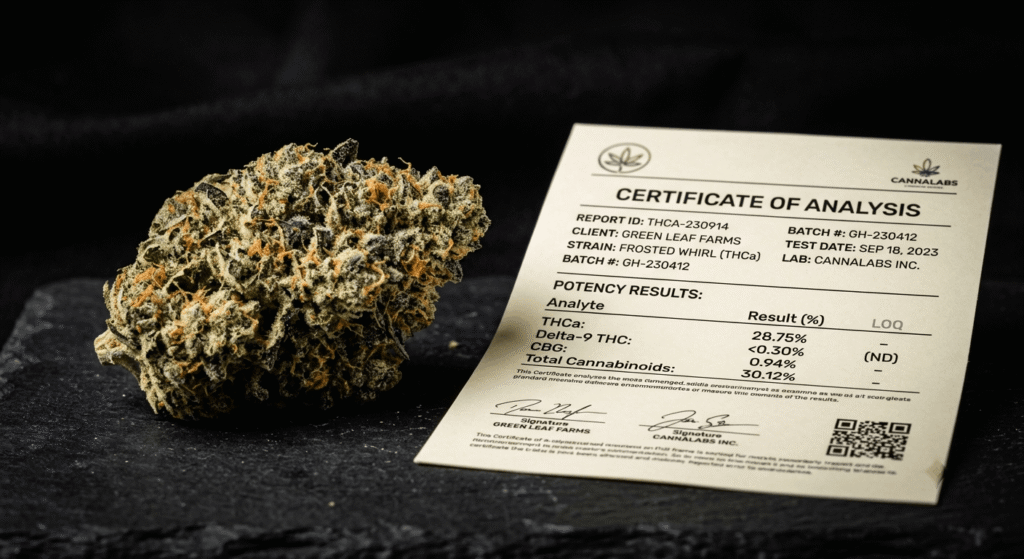
Every concentrate worth buying carries a current, third-party certificate of analysis (COA). That document confirms two things: potency (the actual THCa percentage) and safety (residual solvents, pesticides, heavy metals). If a brand can’t show you lab results, that’s the answer. Co Exotics posts lab results publicly so you can verify before you buy.
Starting Material
Concentrate quality tracks directly to the quality of the flower it came from. Top-shelf indoor flower with strong genetics produces a different concentrate than trim or low-grade biomass. Ask where the material comes from and whether the brand tests the input flower too.
Extraction Method
Rosin users have zero solvent exposure by definition. Solvent-based extracts like live resin and badder should list residual solvent levels on the COA. Legal-market concentrates purge solvents to parts-per-million levels considered safe by regulatory standards. But the COA is your verification, not a brand claim.
THCa Concentrate Comparison
| Type | THCa Range | Texture | Terpene Retention | Best For |
|---|---|---|---|---|
| Badder | 70–90% | Creamy, spreadable | Moderate–High | Beginners |
| Crumble | 80–95% | Dry, crumbly | Moderate | Versatility |
| Live Resin | 75–90% | Sauce to sugar | Very High | Flavor seekers |
| Rosin | 65–85% | Soft to tacky | High | Solvent-free users |
| Hash | 40–70% | Pressed solid | Moderate | Traditional smokers |
| Diamonds | 95–99% | Hard crystals | Low (without sauce) | Max potency users |
Common Mistakes to Avoid With THCa Concentrates
- Using too much right away.
Concentrates are 3–5x stronger than flower by weight. A beginner taking a large dab without any tolerance is a common mistake that leads to a rough experience. Start with a portion no bigger than a grain of rice. - Dabbing at the wrong temperature.
Too hot (above 600°F) destroys terpenes and produces harsh, burnt-tasting vapor. Too cold and the concentrate won’t fully vaporize. The 350–450°F window produces clean, flavorful vapor. - Skipping the COA check.
Any cannabis extract without lab documentation is a risk. Residual solvents and contaminants are invisible a COA is the only way to verify what’s actually in your product. - Buying based on price alone.
Budget concentrates often use lower-quality starting material or shorter purging cycles. THCa dabs in the lowest price tier usually reflect that in potency and flavor. - Storing incorrectly.
Concentrates degrade with heat, light, and air exposure. Keep them in airtight containers, away from direct light, ideally at room temperature or cooler.
Frequently Asked Questions
1. What are THCa concentrates?
THCa concentrates are hemp-derived extracts that isolate tetrahydrocannabinolic acid at high percentages typically 60–99% depending on the type. When heated through dabbing or vaping, the THCa decarboxylates into Delta-9 THC. Common forms include badder, crumble, live resin, rosin, hash, and diamonds.
2. Are THCa concentrates legal?
Under the 2018 Farm Bill, hemp-derived products testing below 0.3% Delta-9 THC are federally legal. THCa concentrates made from compliant hemp meet that standard. State laws vary, so confirm your state’s rules before purchasing.
3. Can beginners use THCa dabs?
Yes, with caution. Concentrates are significantly stronger than flower. Beginners should:
- Start with a 10–25mg portion (rice-grain size)
- Use low-temperature dabs (350–400°F)
- Choose easier-to-handle textures like badder or crumble
- Wait 15–30 minutes between doses
4. What’s the difference between live resin and rosin?
Live resin uses solvents (usually butane or ethanol) to extract cannabinoids from fresh-frozen flower. Rosin uses no solvents only heat and pressure. Both preserve terpenes well. Rosin is considered purer and typically costs more; live resin delivers slightly higher potency per gram at a lower price point.
5. Why do terpenes matter in concentrates?
Terpenes shape flavor, aroma, and the overall character of your experience. High-terpene concentrates like live resin and terp sauce offer more complex, full-bodied effects than pure isolates. A well-rounded terpene profile can make a 70% THCa product feel more impactful than a flavorless 95% diamond.
6. How should I store THCa concentrates?
Store in a sealed, non-stick container (silicone or glass) away from heat, light, and humidity. Room temperature or slightly cooler is ideal for most types. Rosin is especially sensitive to heat and should be refrigerated if you’re storing it for more than a few weeks.
Conclusion
THCa concentrates give you one of the most potent and flavorful ways to experience hemp. Whether you start with an easy-to-handle badder, go solvent-free with rosin, or chase maximum potency with diamonds, the key is knowing what you’re buying and why. Lab-tested cannabis extracts from a transparent source are non-negotiable. Start low, learn the textures, and let your experience guide you toward your preferred type. Browse the full Co Exotics concentrates collection to explore lab-verified THCa dabs in every format.