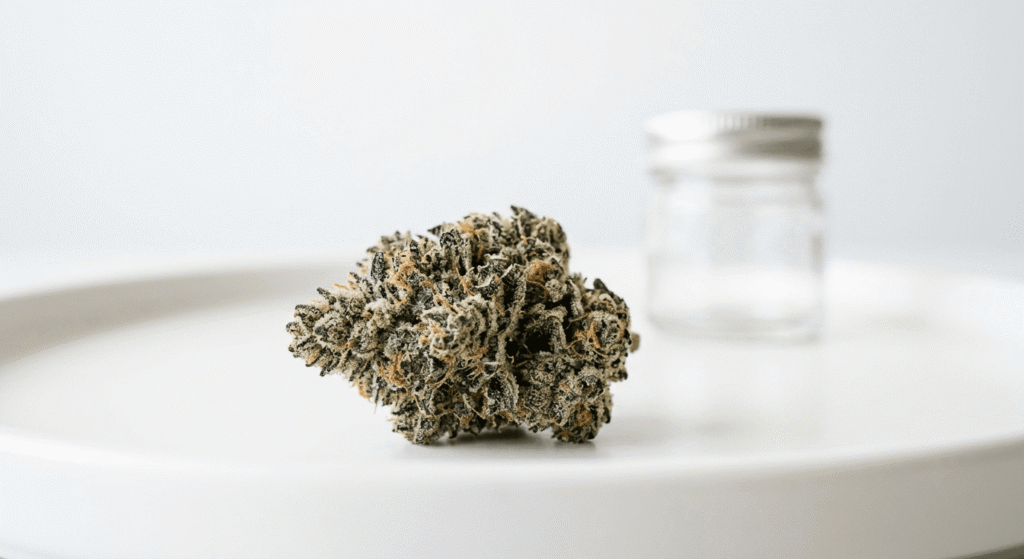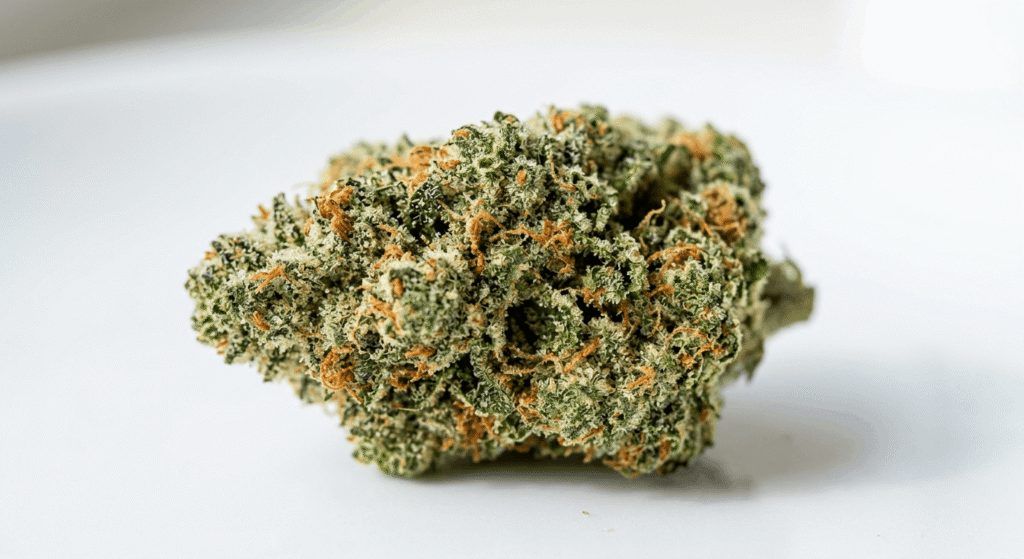
Quick Answer Box: OG Kush genetics trace to a mid-1990s cross involving Chemdawg, Lemon Thai, and a Hindu Kush landrace, first stabilized in Los Angeles and spread almost entirely through clones. That lineage produced the indica-dominant hybrid backbone behind Girl Scout Cookies, Bubba Kush, and dozens of other modern strains still sold as THCa flower today.
What Is OG Kush Genetics?
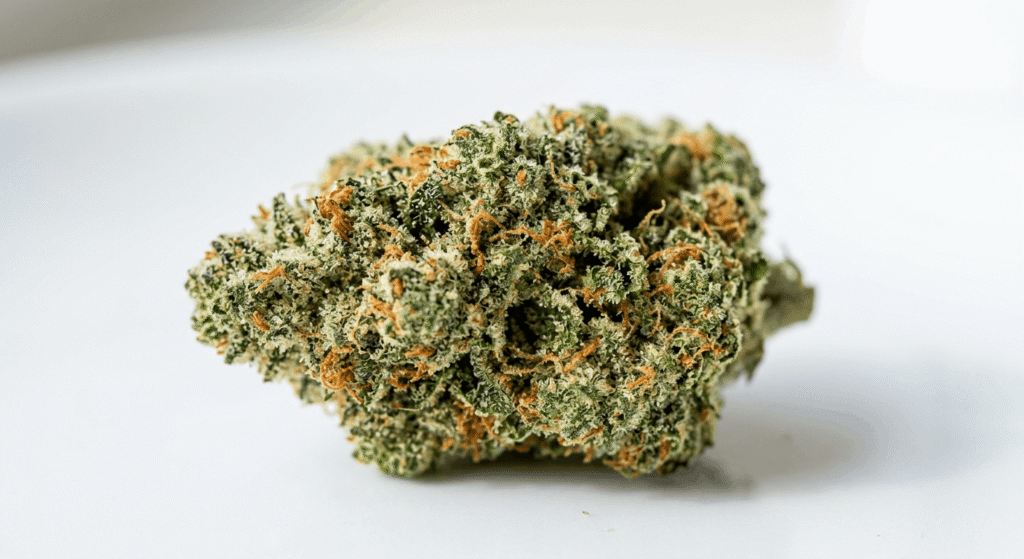
OG Kush genetics refers to the parent lineage, believed to be Chemdawg, Lemon Thai, and a Hindu Kush landrace, that produced the original OG Kush cut in the mid-1990s. The strain’s genetic stability and distinct terpene profile made it the foundation for hundreds of modern hybrid strains grown across US cannabis markets today.
Ask five breeders where OG Kush genetics actually came from and you’ll get five different answers. That’s not a knock on the strain. It’s practically part of its brand. Few cultivars carry this much myth, this much market share, and this much influence on what “quality flower” even means to a modern buyer.
Where Did OG Kush Genetics Come From?
OG Kush’s origin story traces to Florida in the early 1990s, before the cut moved west to California. Grower Matt “Bubba” Berger is widely credited with cultivating the original plant from an unlabeled bag of flower, and by 1996 he had brought cuttings to Los Angeles, where he partnered with Josh Del Rosso to build the strain’s reputation from an underground grow.
From there, the accepted (though unverifiable) theory holds that OG Kush descended from a Northern California variety crossed with Chemdawg, Lemon Thai, and a Hindu Kush plant. Chemdawg brings the fuel-forward pungency. Lemon Thai contributes the citrus brightness. Hindu Kush, a true landrace strain native to the mountain range between Afghanistan and Pakistan, supplies the structural density and sedating backbone. Landrace genetics like Hindu Kush evolved in isolation over centuries, which is exactly why they hand off such stable, predictable traits to the hybrids bred from them.
What actually built the legend wasn’t seed distribution. It was cloning. OG Kush spread almost entirely through cutting-shared genetics rather than seed lines, which is unusual for a strain of this influence. By 2004, OG Kush had reached the Emerald Triangle, where growers developed regional variants suited to different climates. Mandelbrot’s OG Kush was the most notable cut of that era. Two years later, DNA Genetics used the lineage to breed what’s now known as Kosher Kush. Each new cut carried the same core genetic fingerprint forward, just expressed a little differently depending on the grower and the environment.
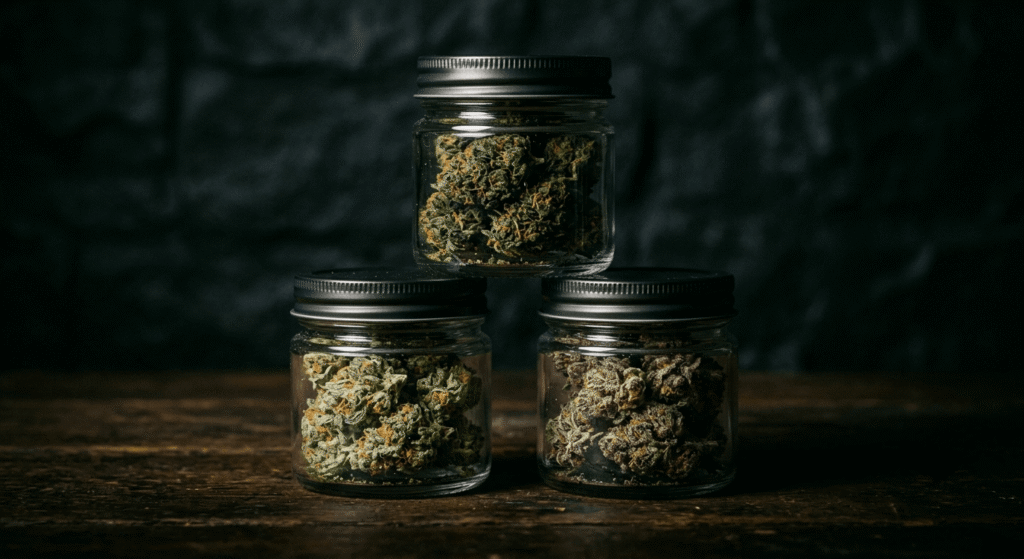
This is also why OG Kush lineage is so hard to pin down with certainty. Clone-only propagation preserves a genetic snapshot, but it also means there’s no single “correct” OG Kush. There are dozens of phenotypes, all claiming the same ancestry, all slightly different in structure, potency, and aroma.
What Strains Descend From OG Kush?
The hybrid strain genetics built on OG Kush’s backbone now define a huge share of the commercial cannabis market. Strains with a direct or heavily influenced lineage include:
- Girl Scout Cookies (GSC)
- Bubba Kush
- SFV OG (San Fernando Valley OG)
- Fire OG
- Tahoe OG
- Ghost OG
- Wedding Cake
Every one of these carries forward some piece of OG Kush’s terpene architecture, whether that’s the diesel pungency, the citrus edge, or the dense, resin-heavy bud structure.
What Terpene Profile Defines OG Kush Genetics?
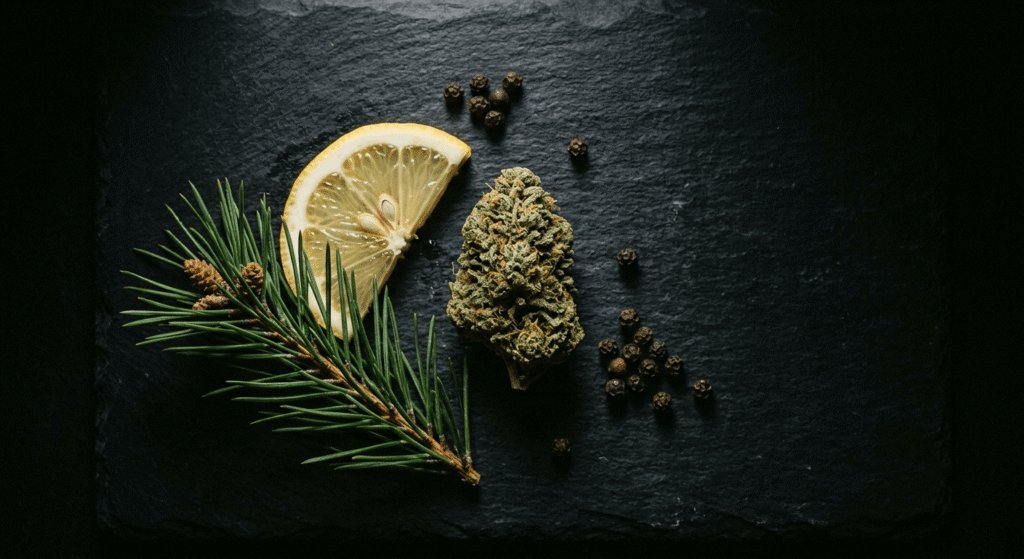
OG Kush’s terpene profile centers on myrcene, limonene, and beta-caryophyllene, in roughly that order of dominance depending on the phenotype. That combination produces the strain’s signature lemon-diesel-pine aroma and shapes its reputation as a fast-acting, full-spectrum indica-dominant hybrid.
Myrcene is the terpene most associated with cannabis’s heavier, body-relaxing effects, and it typically anchors OG Kush’s profile at meaningful concentration. Limonene adds the bright citrus top note and is generally linked to a clearer, more uplifting onset. Beta-caryophyllene rounds things out with a peppery, fuel-adjacent depth. Growers and consumers alike describe the resulting experience as two-phase: an early cerebral lift that gradually settles into deeper physical relaxation over roughly two to three hours.
Genetically, this is a textbook indica-dominant hybrid split, generally cited somewhere in the 55 to 75 percent indica range depending on the specific cut. That range itself tells you something important about hybrid strain genetics: two plants both labeled “OG Kush” can behave differently on the shelf because the underlying phenotype expression varies even within a single, clone-derived lineage.
How OG Kush Genetics Show Up in THCa Flower Today
Most OG Kush sold in the legal hemp market now shows up as THCa flower rather than delta-9 dominant cannabis. THCa, or tetrahydrocannabinolic acid, is the raw, non-intoxicating precursor that converts to THC when heated. Hemp-derived THCa flower carrying OG Kush genetics has become a category staple precisely because the strain’s dense bud structure, heavy trichome coverage, and stable terpene expression translate cleanly to hemp cultivation.
That said, the regulatory ground under THCa flower shifted in late 2025. Under the 2018 Farm Bill, hemp was defined based only on delta-9 THC concentration, which meant cannabis-derived products containing other cannabinoids were arguably exempt from federal control so long as delta-9 stayed at or below 0.3 percent by dry weight. In November 2025, Public Law 119-37 amended that definition under 7 U.S.C. § 1639o, changing the threshold to a total THC concentration, including THCa, of less than 0.3 percent on a dry weight basis. That change takes effect a year after enactment, so sourcing from operators who test and document compliance under the current framework matters more than ever for anyone buying OG Kush genetics as hemp flower.
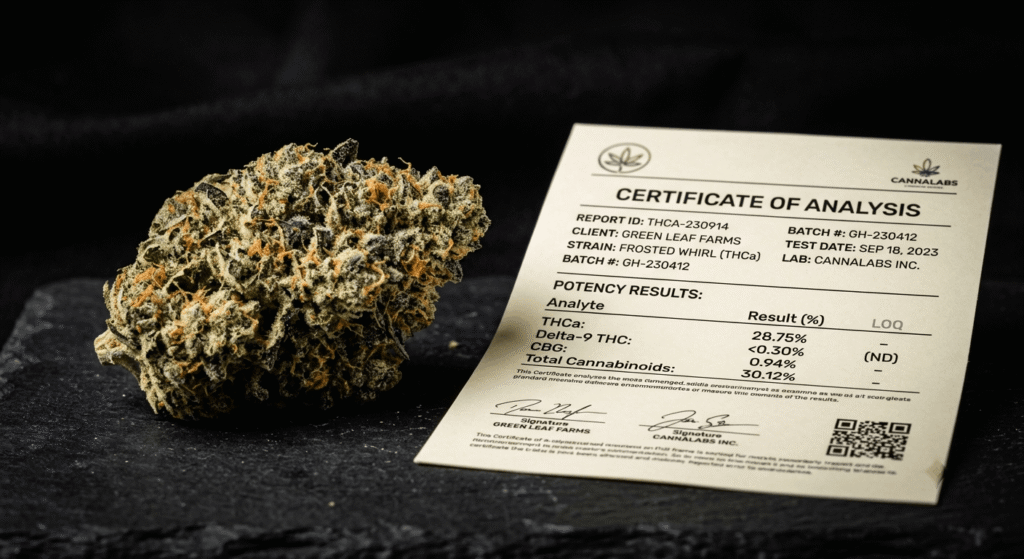
For buyers, that regulatory shift is exactly why lab documentation and sourcing transparency matter more than a strain name on a label. A well-grown indoor flower cut of OG Kush genetics should come with test results that confirm compliant total THC, not just a delta-9 number.
Frequently Asked Questions
1. Is OG Kush indica or sativa?
OG Kush genetics express as an indica-dominant hybrid, generally cited between 55 and 75 percent indica depending on the specific phenotype. The remaining sativa influence, largely traced to Lemon Thai, is what gives OG Kush its early cerebral lift before the body-relaxing effects take over.
2. What strains did OG Kush create?
OG Kush genetics sit behind dozens of modern hybrids, including:
- Girl Scout Cookies
- Bubba Kush
- SFV OG and Fire OG
- Tahoe OG and Ghost OG
Each descendant carries forward some version of OG Kush’s terpene profile and dense bud structure.
3. Why is OG Kush’s lineage disputed?
Because OG Kush spread through clones rather than seeds, there’s no single documented cross to point to. The Chemdawg, Lemon Thai, and Hindu Kush ancestry is the most widely accepted account, but breeders openly acknowledge it’s part verified history and part grower lore.
4. What does OG stand for in OG Kush?
The most common explanation is “Original Gangster,” marking the cut as the original Kush that set the standard other hybrids get measured against. Some growers instead credit “Ocean Grown,” tied to its early California cultivation near the coast. Both explanations persist, and neither has a confirmed origin.
5. How much THC does OG Kush genetics typically test at?
OG Kush phenotypes commonly test between 18 and 27 percent THC, depending on the specific cut, growing conditions, and curing process. That range places it well above early-1990s potency levels and explains why the lineage remains a benchmark for high-THCa flower breeding today.
Conclusion
OG Kush genetics didn’t just produce one influential strain. They built the template most of today’s West Coast-style hybrids still follow, from the terpene architecture down to the clone-first propagation model that keeps a cut’s characteristics consistent from harvest to harvest. Whether you’re chasing the citrus-diesel nose of the original or exploring one of its many descendants, understanding the lineage behind OG Kush genetics makes it easier to know what you’re actually buying. Browse Co Exotics’ THCa flower selection to find OG Kush-lineage cuts tested for full compliance under current federal standards.