Quick Answer Box: The entourage effect is the theory that cannabis compounds, including cannabinoids and terpenes, work together to create stronger or more nuanced effects than any single compound alone. Cannabinoid synergy, the interaction of these compounds, is believed to enhance therapeutic benefits when consuming full-spectrum cannabis products.
What is the Entourage Effect?
The entourage effect is the hypothesis that cannabinoids such as THC, CBD, CBG, and CBN act together with terpenes like pinene, myrcene, limonene, and caryophyllene to produce amplified or modulated effects in the body and mind. First proposed by Ben-Shabat et al. in 1998 and later expanded by Dr. Raphael Mechoulam, the term describes how the many compounds in the cannabis plant interact synergistically. This concept suggests that the full chemical spectrum of cannabis, rather than a single isolated component, delivers unique therapeutic benefits through multiple mechanisms in your body.
What Role Do Terpenes and Phytocannabinoids Play?
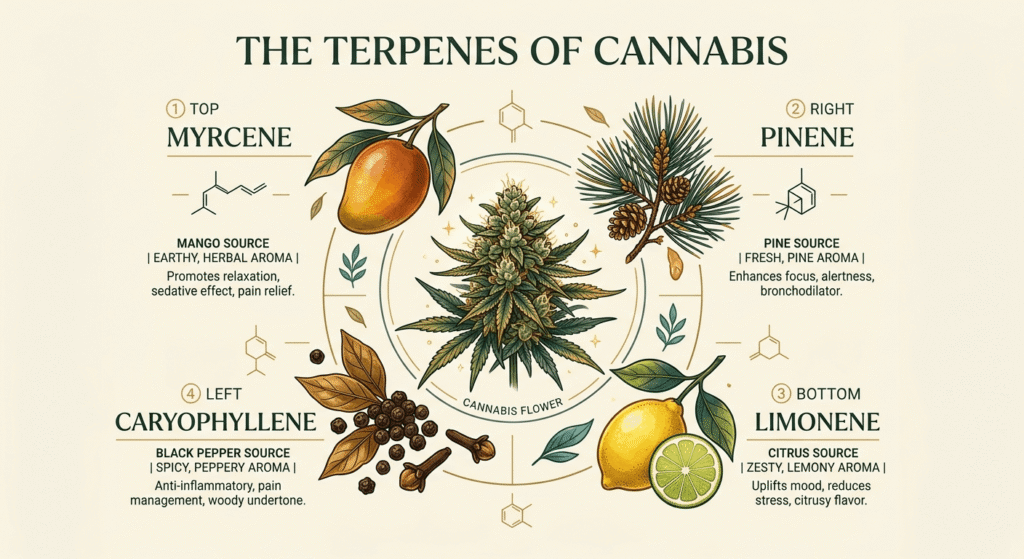
Terpenes are aromatic compounds in cannabis and many other plants that contribute distinctive scents and flavors. Myrcene, pinene, limonene, and caryophyllene are prominent terpenes, each offering not only aroma but also unique biological effects. Phytocannabinoids, which include THC, CBD, CBG, CBC, and CBN, are plant-derived cannabinoids that interact with your endocannabinoid system (ECS), influencing mood, appetite, pain, and sleep.
Both terpenes and phytocannabinoids are produced within the resinous trichomes of the cannabis flower. Cannabinoids primarily interact with CB1 and CB2 receptors in the ECS, while terpenes influence the ECS more indirectly. For example, they may modify neurotransmitter function, alter blood–brain barrier permeability, or affect receptor sites like TRPA1. This diversity means that two cannabis products with similar THC content can have dramatically different effects, depending on their terpene and cannabinoid profiles.
How Phytocannabinoids and Terpenes Interact
Phytocannabinoids such as CBD and CBG can modulate the psychoactive intensity of THC, while terpenes like pinene may alter the experience by affecting alertness, mood, or even memory. The interplay between cannabinoids and terpenes known as cannabinoid synergy helps shape the overall effect of a cannabis strain or product.
Major Cannabinoids and Key Terpenes
Over 100 cannabinoids and dozens of terpenes have been identified in cannabis, but several stand out for their prevalence and effects:
- THC (tetrahydrocannabinol): Produces euphoria and altered perception by primarily binding to CB1 receptors.
- CBD (cannabidiol): Non-intoxicating, acts on several receptor systems, and is widely studied for anxiety, inflammation, and seizure control.
- CBG (cannabigerol): Serves as a precursor to other cannabinoids and is a focus for anti-inflammatory and neuroprotective research.
- CBN (cannabinol): Forms as THC ages and is often linked to sedative or sleep-promoting effects.
Key terpenes include:
- Myrcene: Musky, earthy aroma; may have sedative and pain-relieving properties, and can increase cannabinoid absorption.
- Pinene: Smells like pine; can promote alertness and may counteract some of THC’s short-term memory effects.
- Limonene: Citrus scent; studied for potential mood elevation and stress relief.
- Caryophyllene: Peppery notes; unique among terpenes for acting directly on CB2 receptors, potentially offering anti-inflammatory support.
The variety of phytocannabinoids and terpenes in cannabis creates a wide range of potential effects, depending on the specific combination found in each strain or product.
How Does the Entourage Effect Work?
Cannabinoid synergy is the process where cannabinoids and terpenes interact to amplify, balance, or adjust each other’s effects. This synergy can generate stronger or more balanced outcomes than isolated compounds. For example, beta-caryophyllene’s activity as a CB2 receptor agonist may increase anti-inflammatory effects when paired with cannabinoids, a result rarely seen with single-compound products.
Preclinical research supports some of the entourage effect’s mechanisms. Studies show that CBC with pinene or linalool may reduce pain through TRPA1 and CB2 pathway interaction, while myrcene enhances sedative effects by acting on various ion channels. Some terpenes, notably myrcene and linalool, have also been found to change the bioavailability of cannabinoids or influence brain signaling outside traditional cannabinoid receptors.
However, most terpenes do not activate CB1 or CB2 directly. Instead, their synergy arises by modulating neurotransmitter systems, supporting anti-inflammatory pathways, or improving cannabinoid transport across the blood–brain barrier. Though laboratory and animal data remain encouraging, robust clinical proof of the entourage effect in humans is still developing, as shown in reviews by MDPI, NIH/PubMed Central, and Project CBD.
Multiple Mechanisms Beyond Cannabinoid Receptors
While CB1 and CB2 activation are important, terpenes often exert their influence elsewhere. Some modify serotonin or GABA signaling, affect liver enzymes involved in metabolizing cannabinoids, or change activity in brain regions like the cortex. This multi-target action helps explain why whole-plant cannabis often produces outcomes that cannabinoid isolates cannot replicate.
What Are Some Typical Synergistic Combinations?
Research and anecdotal studies have highlighted specific cannabinoid and terpene pairings:
- CBC + Pinene/Linalool: Shown in animal studies to reduce inflammation via CB2 and TRPA1 synergy, which may translate to pain relief.
- THC + CBD: The best-known combination, CBD appears to moderate THC’s psychoactivity, potentially reducing anxiety or memory issues without eliminating beneficial effects. The balance is dose-dependent, and too much CBD may neutralize THC’s benefits.
- Myrcene + CBN: Frequently used for sleep support, as myrcene’s sedative qualities complement CBN’s sleep promoting attributes commonly sought for nighttime use or insomnia.
- Limonene + CBG: Limonene may boost mood, and when paired with CBG’s neuroprotective properties, could promote focus and emotional stability, though more validation is needed.
User responses vary widely, so these combinations should serve as guides. Tracking your personal experience with different cannabinoid and terpene profiles can be helpful consider keeping notes or a journal.
Optimal Cannabinoid Terpene Ratios
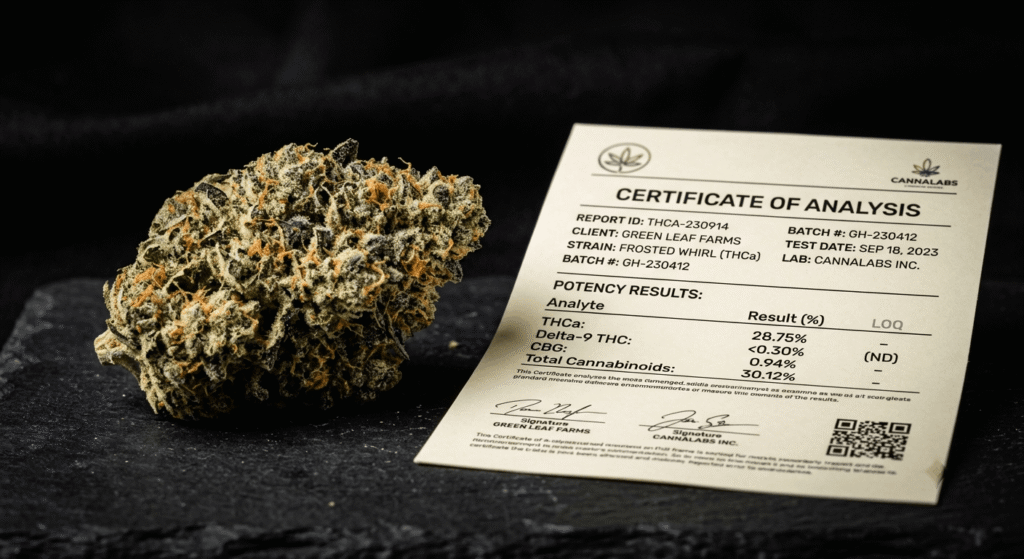
Finding optimal cannabinoid terpene ratios may require some experimentation. Current research encourages individuals to look for third-party lab reports when shopping for cannabis products, such as those provided on Lab Results, to better understand a product’s unique chemical makeup.
Full-Spectrum vs. Isolate
Cannabis products belong to three major categories: full-spectrum, broad-spectrum, and isolate. Full-spectrum products contain a broad mix of cannabinoids and terpenes, preserving the plant’s chemical diversity for maximum cannabinoid synergy and entourage effect. Broad-spectrum products remove THC but retain most other compounds, offering synergy but without the primary psychoactive ingredient.
Isolates strip away all but one compound, usually CBD or CBG. These appeal to users needing THC-free products or precise dosing but lack the rich synergy of whole-plant formulations, as confirmed by systematic reviews from MDPI and Project CBD.
Does Consumption Method Affect the Entourage Effect?
The method of consumption can influence the presence of terpenes and cannabinoids. Inhaled products, like flowers or vaporizers, generally retain higher terpene levels, increasing the possibility of synergy. Edibles and tinctures may lose significant terpenes during processing. When evaluating lab results, available through Lab Results, consider the impact of processing and delivery method on the entourage effect.
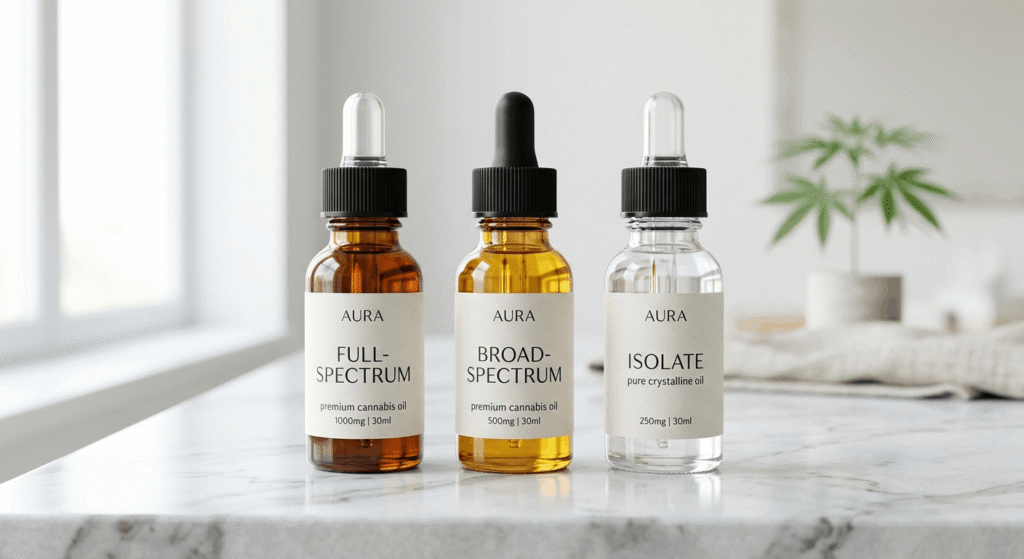
Full-Spectrum, Broad-Spectrum, and Isolate Cannabis Products
| Product Type | Active Compounds Present | THC Content | Potential for Entourage Effect | Pros | Cons |
|---|---|---|---|---|---|
| Full-Spectrum | Multiple cannabinoids (THC, CBD, CBG, etc.), terpenes | Up to 0.3% (hemp), varies in cannabis | Highest | Maximum synergy, whole-plant benefits | Not suitable for those sensitive to THC |
| Broad-Spectrum | Multiple cannabinoids, terpenes, no THC | 0% | Moderate | Synergy without THC’s effects | Less effective than full-spectrum |
| Isolate | Single cannabinoid (usually CBD or CBG), no terpenes | 0% | None | Precise dosing, THC-free | Lacks synergy, potential reduced benefit |
How Can You Experience the Entourage Effect?
- Choose Full-Spectrum Products: Begin with products labeled “full-spectrum” containing multiple cannabinoids and terpenes.
- Examine Lab Reports: Reference Lab Results or equivalent sources to confirm cannabinoid and terpene content.
- Match Product to Desired Outcome: Identify whether you need pain relief, improved sleep, or mood support pair myrcene and CBN for sleep, limonene and CBG for focus, or CBD and caryophyllene for inflammation.
- Start with a Low Dose: Begin low and increase gradually, tracking your effects.
- Experiment and Track Results: Effects can vary by person and formulation. Keeping a journal helps you identify the best combinations.
- Consult Trusted Resources: If you have medical questions, check official hemp laws, speak to a qualified provider, and review educational content on Blogs.

What Are Common Mistakes with Terpenes and Cannabinoid Synergy?
Some frequent pitfalls can limit your experience of cannabinoid synergy:
- Expecting Immediate Effects: Some pairings take time to notice, so patience and close observation are important.
- Disregarding Lab Tests: Skipping lab reports can lead to mismatched expectations; always verify cannabinoid and terpene content.
- Assuming More is Better: Optimal effects often rely on balance, not higher dosages especially with ratios like THC and CBD.
- Ignoring Individual Differences: Each person’s response varies; what works for one user may not work for another.
- Trusting All Labels Equally: “Full-spectrum” or “broad-spectrum” does not guarantee a rich cannabinoid and terpene profile, as some products lose compounds during processing.
Staying updated with reliable Blogs and referencing third-party lab data can help you avoid these mistakes.
Frequently Asked Questions
1. Does the entourage effect have proven clinical benefits?
Most available studies, including systematic reviews by MDPI and NIH/PMC, highlight animal and preclinical data suggesting improved outcomes for pain, anxiety, and sleep via cannabinoid synergy. However, robust clinical trials in humans remain limited, and scientific consensus is still evolving.
2. Which cannabinoids and terpenes work best together?
Combinations frequently recommended are THC with CBD for balanced psychoactivity, CBC with pinene or linalool for inflammation, and myrcene with CBN for sleep support. While preclinical evidence for cannabinoid synergy is strongest, individual results may vary as research progresses.
3. How do I choose the right product to experience cannabinoid synergy?
- Look for products labeled full-spectrum or broad-spectrum.
- Check third-party lab results for cannabinoid and terpene content.
- Match the product’s profile to your desired effect.
- Begin with a low dose and adjust as needed.
4. Can the entourage effect help reduce side effects of THC?
Yes, certain phytocannabinoids and terpenes can help moderate the side effects of THC. For example, CBD is known to reduce the intensity of THC’s psychoactivity, potentially easing anxiety or paranoia. Similarly, terpenes like pinene and limonene may counteract some of THC’s impact on short-term memory or mood, providing a more balanced experience. Always start with a low dose and pay attention to how your body responds.
5. Is it important to check lab reports before purchasing cannabis products?
Absolutely. Checking lab reports from reliable sources like Lab Results ensures you know the cannabinoid and terpene profile of your product. This information is crucial to achieving desired effects, verifying potency, and confirming product safety and compliance. Lab reports help you avoid mislabeled products and optimize your experience with cannabinoid synergy.
Conclusion
Understanding the entourage effect empowers smarter choices when exploring cannabis. Utilizing cannabinoid synergy by combining terpenes like myrcene, pinene, limonene, and caryophyllene with major phytocannabinoids can provide enhanced therapeutic outcomes compared to isolates. Always check lab reports, consult trusted Blogs, and stay informed about evolving science and hemp laws to maximize your experience with cannabis products.